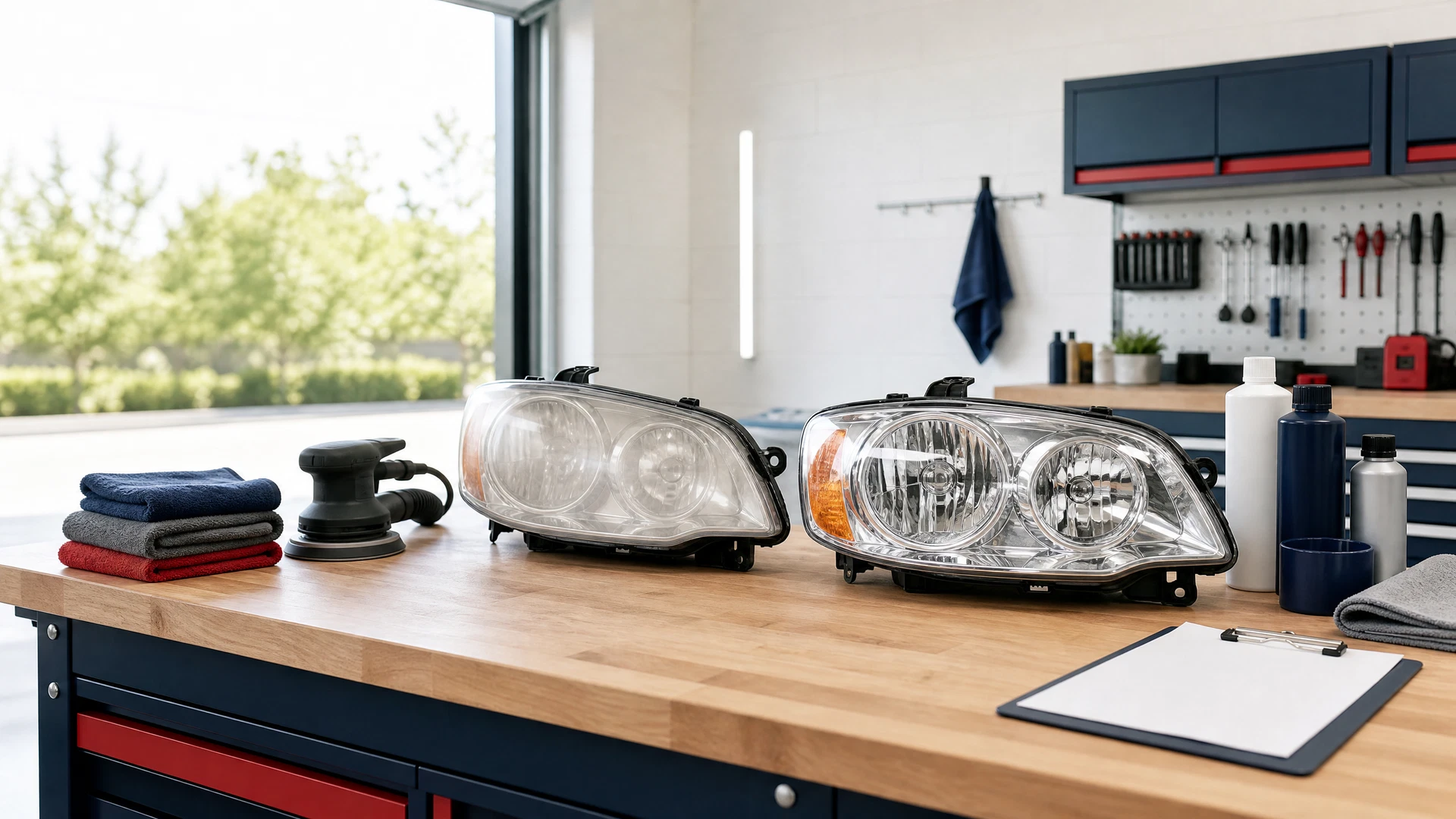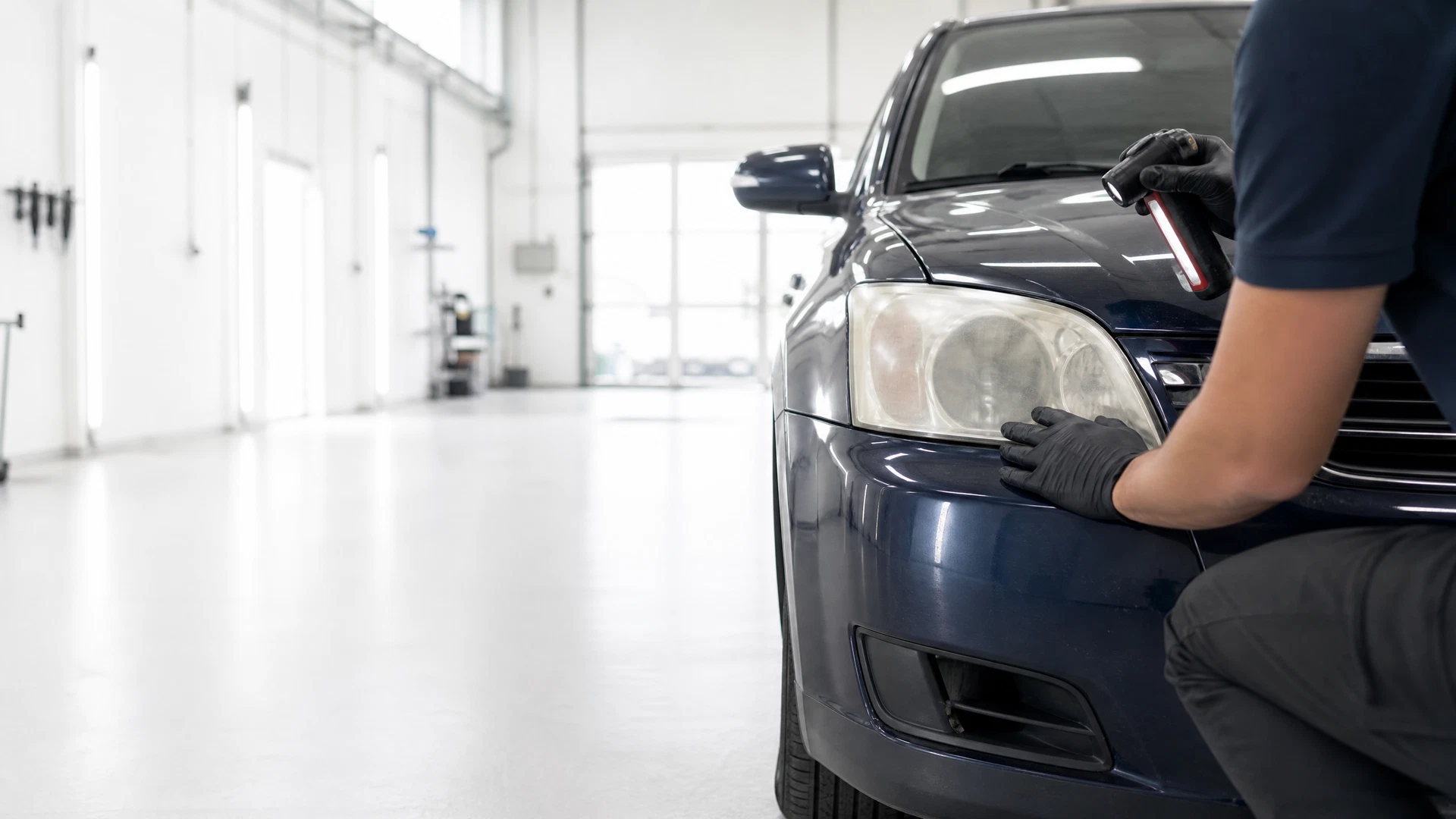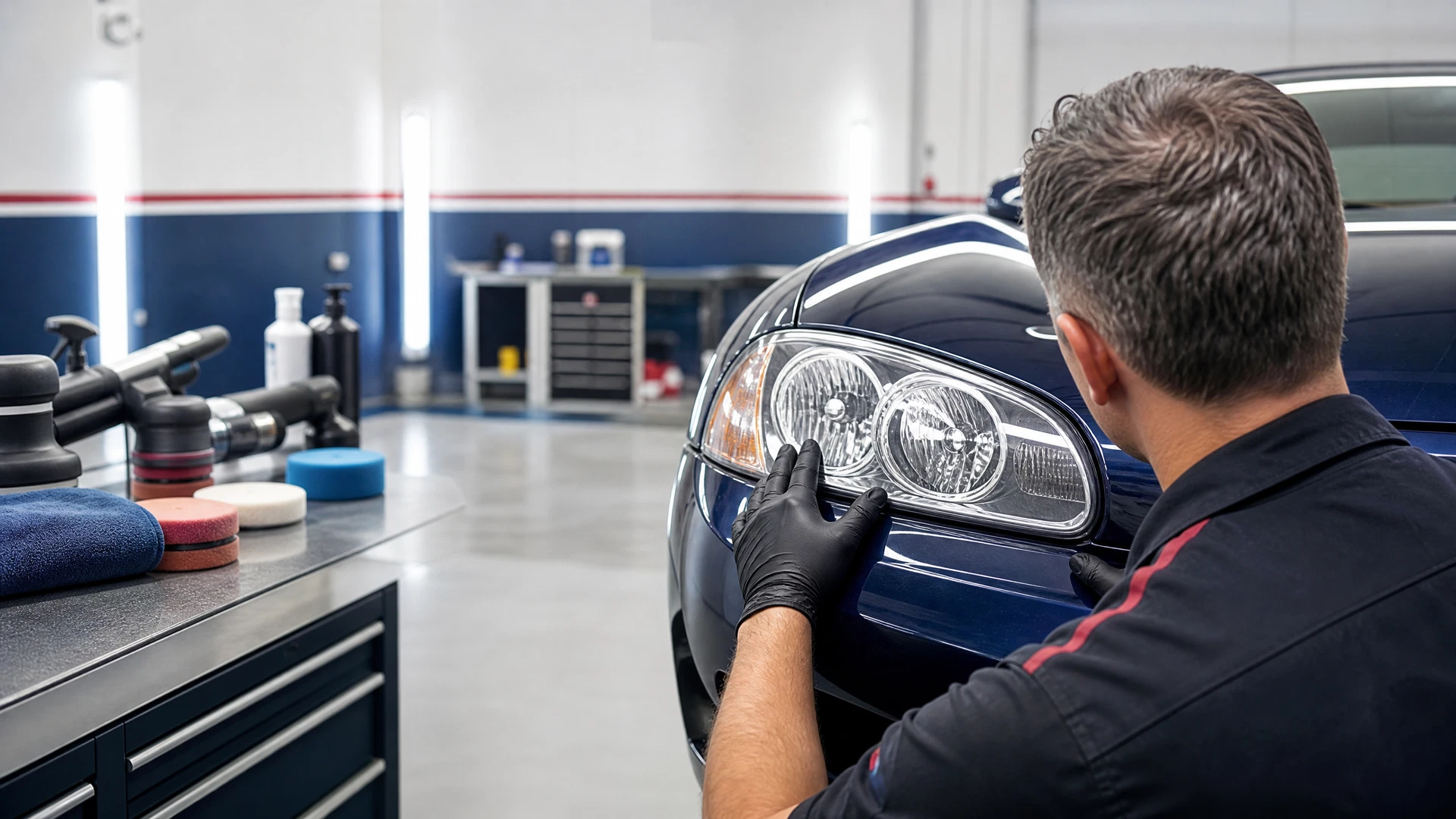
If you already offer headlight restoration, evaluating a new product system is not about finding a shortcut that replaces technique. It is about deciding whether the system fits the workflow, tools, lens conditions, and finish standard you already use. The strongest reason to compare systems is consistency: a repeatable process can make your estimates, material planning, training, and customer communication easier to manage.
The current Headlight Magic product page offers a Pro System labeled for up to 50 sets and an Elite System labeled for up to 100 sets. For a working technician, that capacity difference is useful only when it matches real demand and a documented plan for supplies. Confirm current inventory and product details before ordering.
Evaluate the System Against Your Existing Process
Start with the work you actually perform. List your preparation steps, sanding sequence, polishing approach, protection step, inspection standard, cleanup, and customer handoff. Then compare a product system against that checklist. Do not assume any kit includes every consumable you prefer or that one setup will suit every vehicle condition.
- Confirm what is included and what must be replenished separately.
- Test the process on appropriate practice lenses before changing a paid workflow.
- Set a clear stop point for cracks, internal moisture, deep damage, and failed housings.
- Protect adjacent paint and trim and follow all applicable safety instructions.
- Document before-and-after results only when you have permission to use them.
Capacity Should Support Planning, Not Pressure
Fifty or one hundred restorations are capacity labels, not a production target. Your real throughput depends on condition mix, travel, appointment duration, setup, weather, rework, customer communication, and the standard you set for a finished result. A technician with a full schedule may value a larger capacity. A technician testing a revised process may prefer to start with a smaller commitment and measure the outcome.
At a simple $99 per completed restoration, 50 jobs would be $4,950 in gross revenue and 100 jobs would be $9,900 in gross revenue. Those figures do not measure profitability and should never replace a job-costing review. Use your own material use, labor time, overhead, and close rate to decide whether a product fits the business.
Protect the Customer Experience
Customers care about clear headlights, honest assessments, a clean work area, and understandable aftercare. A good product system supports that experience only when the technician uses it correctly and makes accurate claims about what restoration can and cannot improve. Avoid promising that every lens will look new. Explain when replacement is the safer option and when exterior restoration is likely to help.
Consistency also includes communication. Explain what the service includes, how long it may take, what the quoted price covers, and any limitations that appear after inspection. That professionalism is more valuable than an aggressive revenue claim because it protects referrals and repeat business.
Important Earnings Disclosure
Illustrative income notice: income results are not guaranteed. The 50-restoration, 100-restoration, $4,950, and $9,900 examples are hypothetical gross-revenue illustrations only. Actual results depend on pricing, demand, quality, skills, expenses, labor, travel, marketing, taxes, insurance, local requirements, and individual effort. They are not a promise of profit, customers, or business success.
Denver Metro drivers who prefer a professional service can text Headlight Boost a clear daytime photo at (720) 720-4910 for an honest restoration assessment.