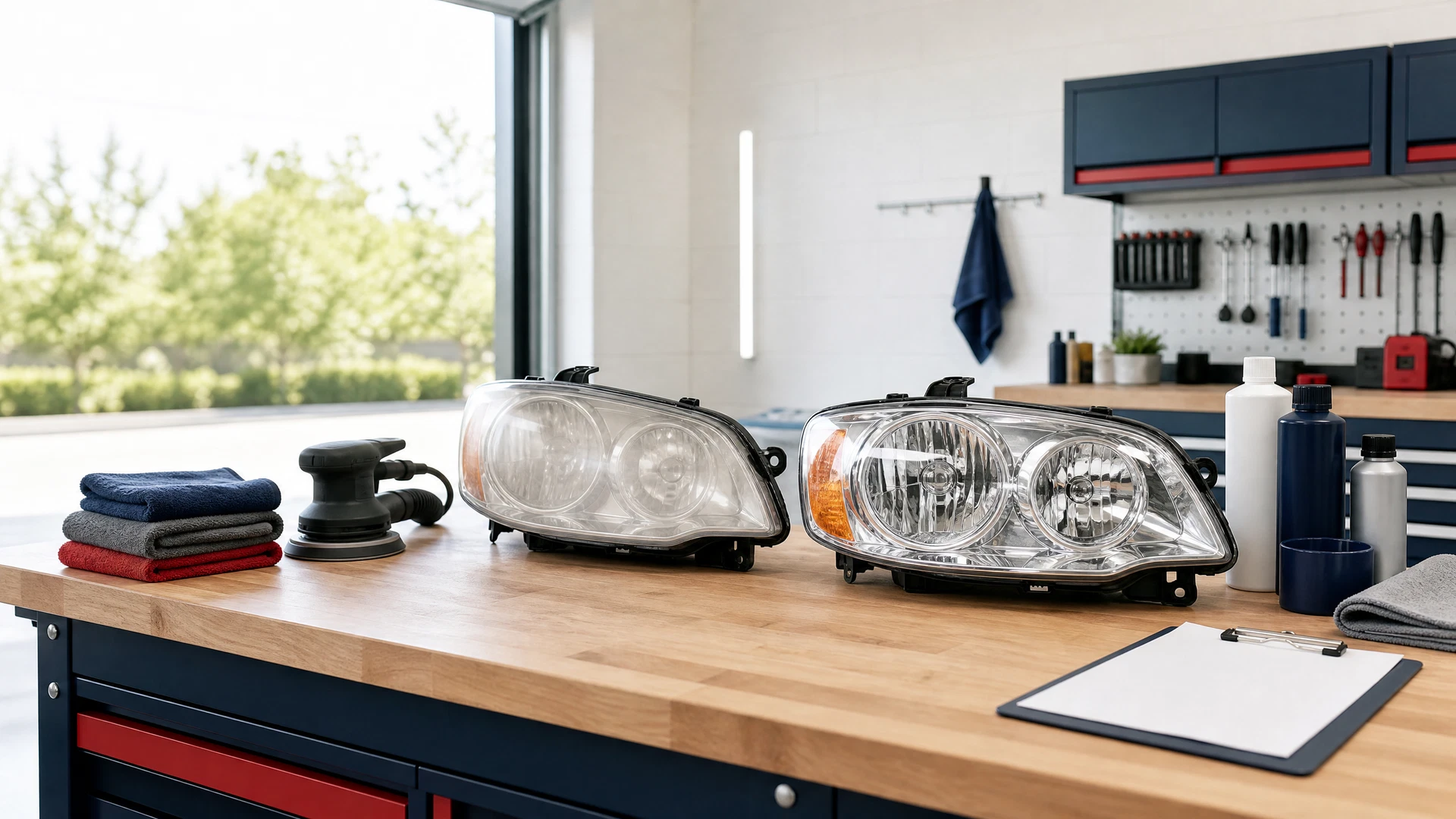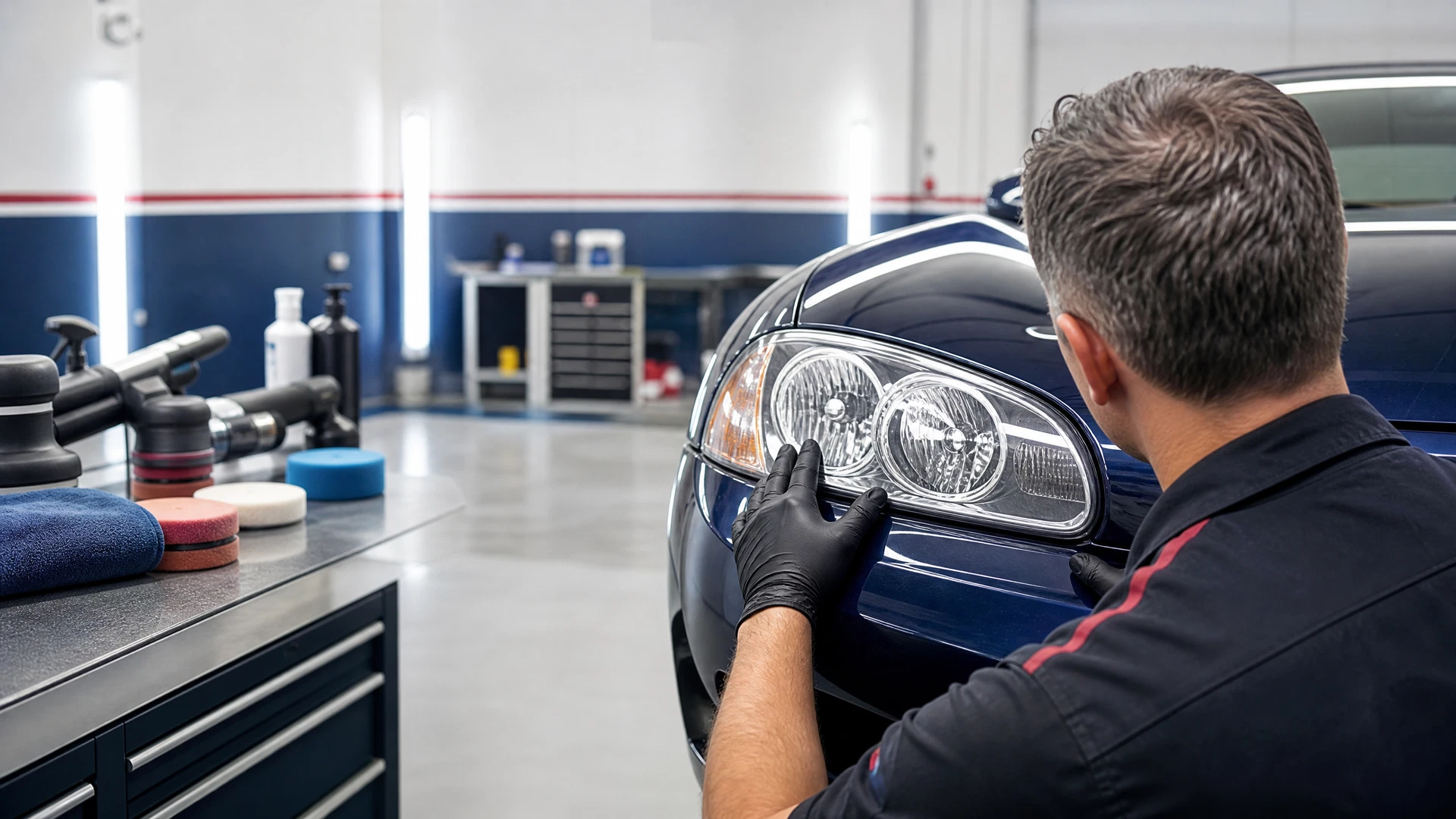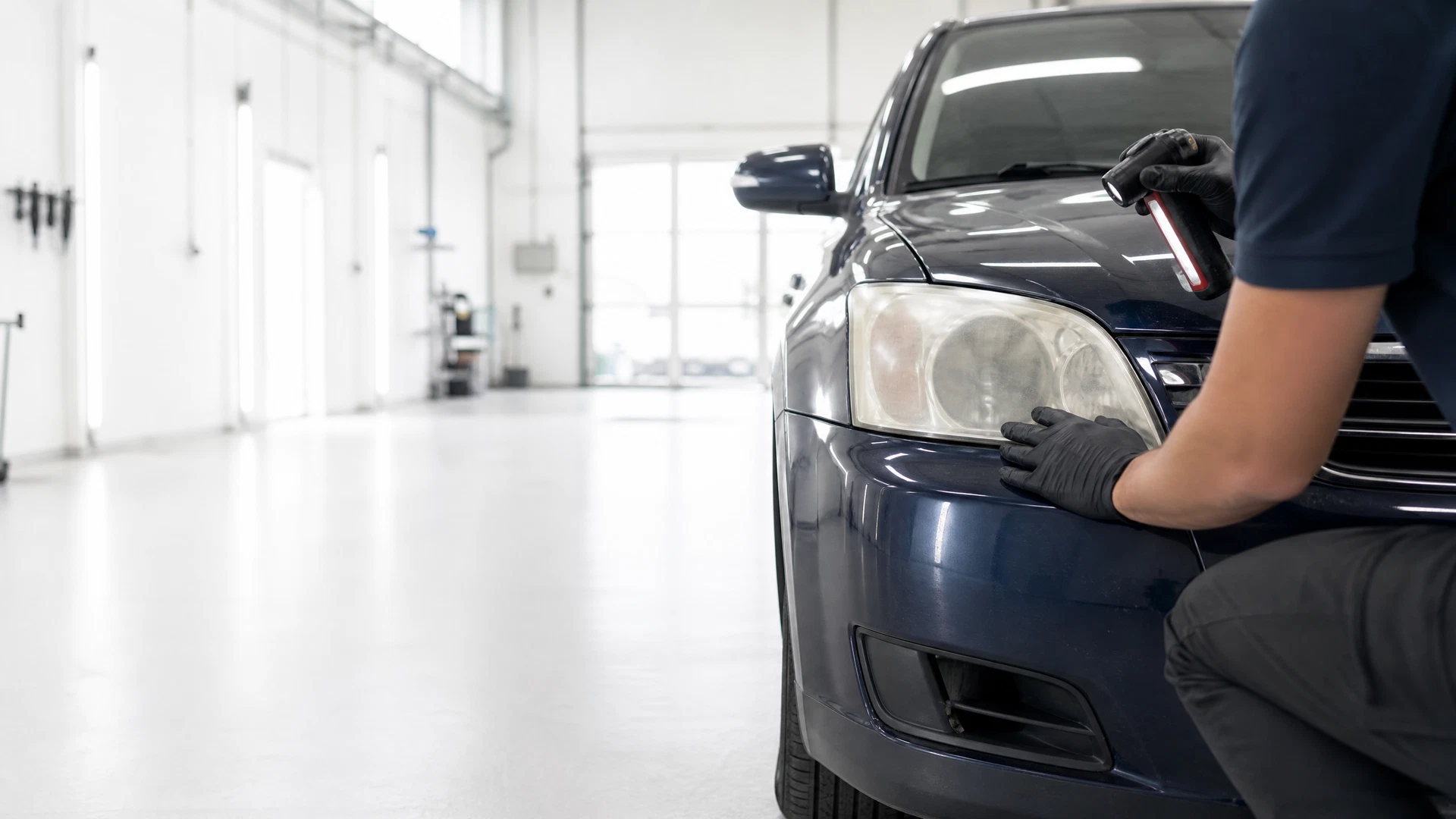
Choosing a headlight restoration system is easier when you separate two questions: what does the system support, and what does your own service plan require? The current Headlight Magic product page has a Pro System option labeled for up to 50 sets and an Elite System option labeled for up to 100 sets. The difference is capacity, not a guarantee that a buyer will complete that number of paid jobs.
At the time of this update, the direct official product page lists the Pro System at $399 and the Elite System at $749. Prices, inventory, and included supplies can change, so confirm the product page before purchasing. Those details matter because an equipment budget should include every separate supply needed for the process you intend to deliver.
Start With the Capacity You Can Use
A 50-restoration capacity may suit a technician who is testing a new service, building a part-time route, or learning a repeatable workflow. A 100-restoration capacity can make sense for an established operator who already has consistent demand, enough time, and a plan for consumables and follow-up work. Bigger capacity is not automatically the better decision if the additional product sits unused or if other operating needs are not covered.
Before you choose, write down how many headlight restoration appointments you realistically expect to complete in the next few months. Include practice time, travel, weather, seasonality, customer response time, and jobs that are not appropriate for restoration. That exercise keeps a capacity decision tied to your actual operation instead of someone else's results.
Use $99 as a Clear Comparison Point
For a straightforward gross-revenue illustration, a $99 restoration price produces $4,950 across 50 completed jobs and $9,900 across 100 completed jobs. That is useful only as a way to compare volume. It does not establish what you should charge, how many jobs you will sell, or how much money will remain after operating costs.
Your price should reflect the lens condition, your process, materials, travel, time, local market, and the service promise you can actually keep. A severely oxidized lens or a vehicle far outside your route may need a different estimate. Cracks, internal moisture, and damaged housings may require replacement rather than exterior restoration.
Budget Beyond the Kit
A more complete investment checklist includes consumables, paint and trim protection, cleaning materials, towels, safety equipment, travel, payment processing, insurance, and marketing. It should also include time for photo assessments, scheduling, setup, cleanup, customer education, and aftercare questions. Treat those as operating inputs, not surprises after the first appointment.
When the work is consistent, track every job. A simple worksheet can show the actual price collected, time spent, material use, travel distance, and customer source. With those records, you can decide whether the 50-restoration or 100-restoration capacity matches the demand you have earned.
Important Earnings Disclosure
Illustrative income notice: income results are not guaranteed. The $99, $4,950, and $9,900 examples are hypothetical gross-revenue illustrations, not profit estimates or promises of earnings. Actual revenue and profit vary with demand, pricing, skills, quality, expenses, taxes, insurance, marketing, time, local requirements, and individual execution. This article is educational and not financial advice or a business opportunity offer.
For Denver Metro vehicle owners seeking a professional headlight restoration rather than a product or business plan, text a clear daytime photo to (720) 720-4910 for an honest assessment.