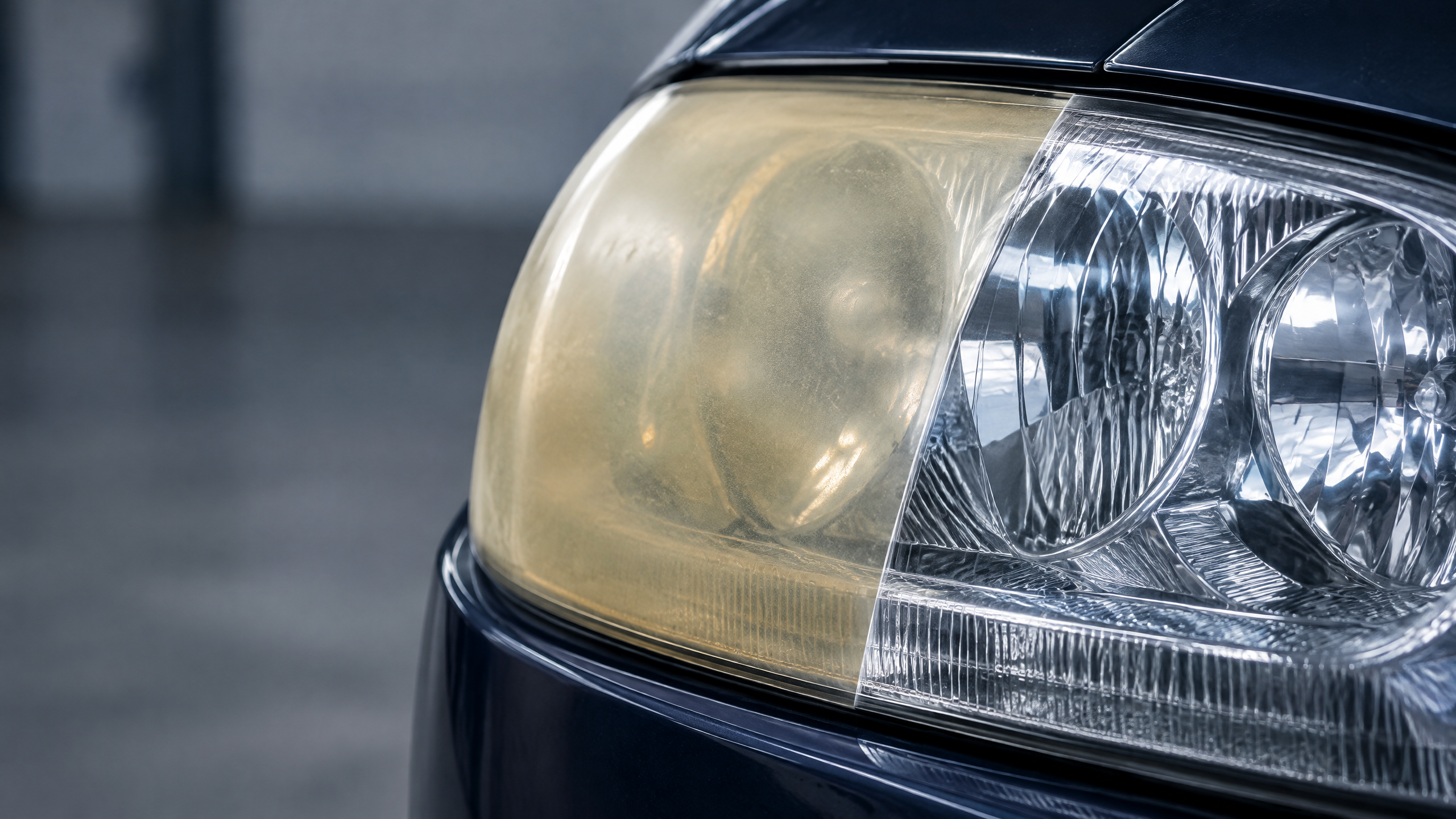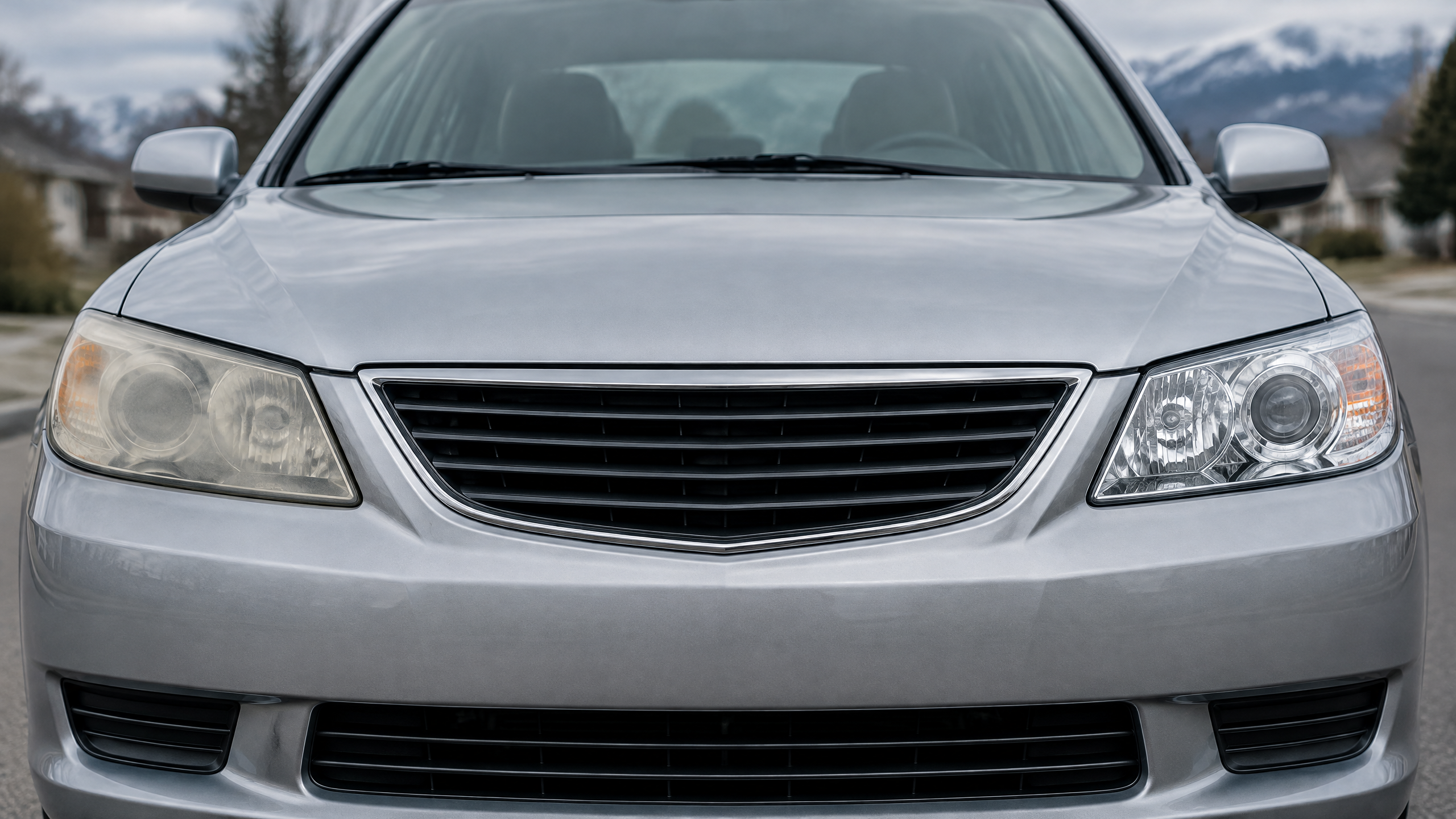
In many cases, an exterior headlight lens can be restored while the assembly remains installed on the vehicle. That is often the practical approach when the problem is limited to accessible exterior oxidation, yellowing, haze, or light surface wear. It does not mean every headlight is a candidate for in-place restoration.
The condition of the lens, housing, seals, nearby paint and trim, and the lighting system all matter. A careful inspection comes before any decision about whether exterior work can be completed safely and consistently.
What In-Place Restoration Means
For an eligible lens, the headlight stays mounted while the exterior surface is cleaned, the surrounding vehicle surfaces are protected, the outer lens is refined as appropriate, and a compatible protective finish is applied. The work focuses on the exterior plastic lens only.
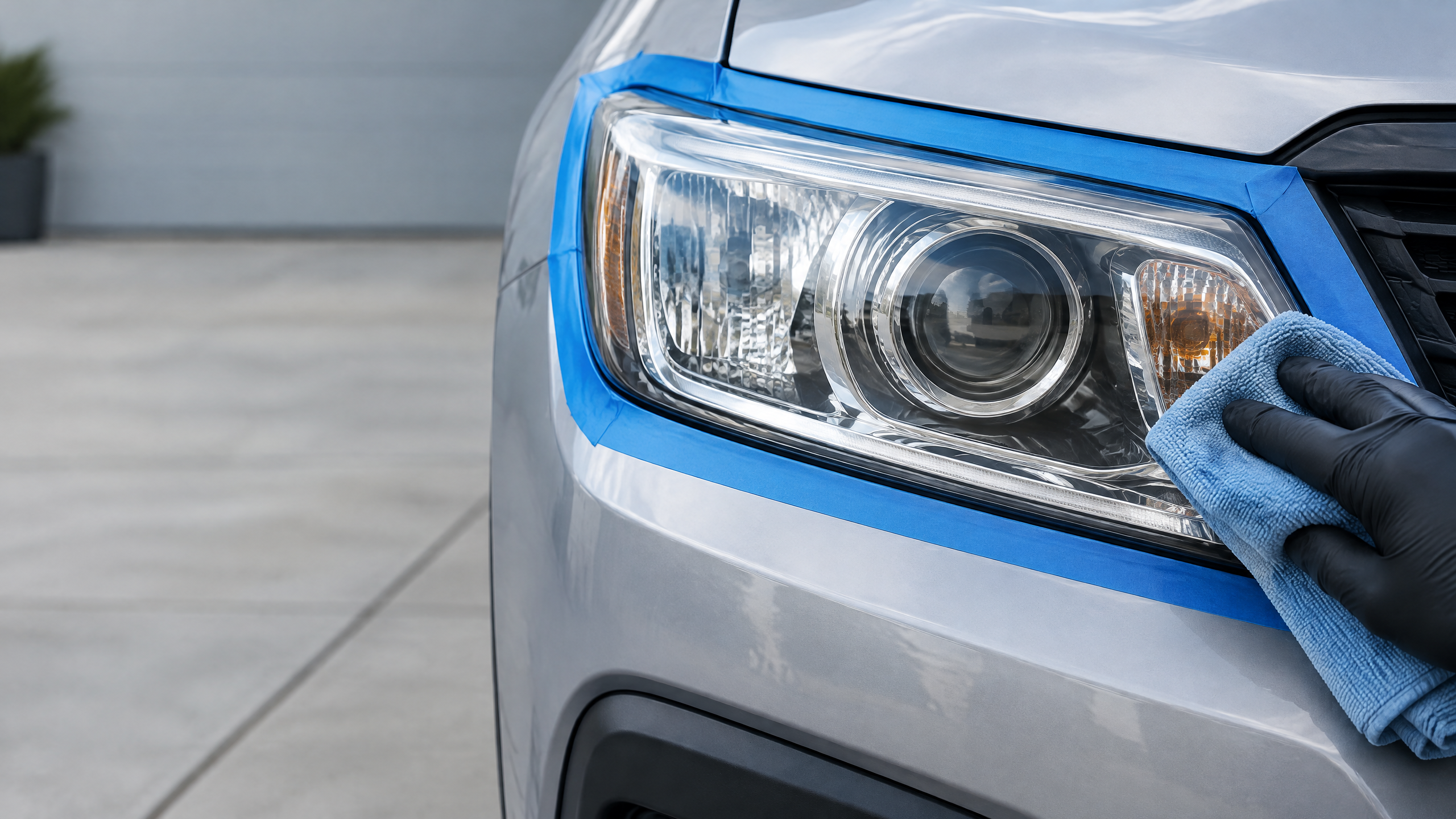
This is why proper preparation matters. The surrounding bumper, paint, trim, grille, chrome, and panel gaps need attention before surface work begins. A professional process uses careful cleaning and masking to help keep abrasion, compounds, residue, and coating materials off adjacent surfaces.
Protecting Paint and Trim Is Part of the Job
Masking is not a cosmetic afterthought. Manufacturer restoration procedures describe cleaning first and protecting the perimeter around the lens before progressive surface work. Tape and other protective methods must be used thoughtfully around chipped, weathered, repainted, or delicate surfaces, because those areas can have their own risks.
Headlight Boost assesses the adjacent surfaces before starting. If the surrounding finish, the lens condition, or the assembly construction makes in-place work a poor choice, we do not treat that as a simple detail job.
When an Installed Lens May Be a Candidate
An installed assembly may be a reasonable candidate when the primary issue is on a structurally sound exterior lens. Common examples include widespread oxidation, yellowing, dull haze, failing outer coating, and limited surface wear that can be evaluated without removing excessive material.
Even then, the result depends on the vehicle and the condition of the lens. Deep gouges, severe pitting, crazing, or age-related damage may limit what can be improved. A photo is useful for an initial conversation, but an in-person look can confirm the condition.
When Restoration Is Not the Repair
Exterior restoration is not a repair for cracks, holes, warped plastic, broken mounting points, loose housings, internal reflector or projector damage, water inside the lamp, failed seals, or collision damage. Those conditions can require component repair, a seal or housing diagnosis, or assembly replacement.
It also does not repair bulbs, LED or HID components, drivers, wiring, connectors, sensors, adaptive-lighting systems, or electrical faults. A cloudy lens can exist alongside those problems, but polishing the exterior surface will not correct them.
Restoration Does Not Aim Headlights
In-place lens work does not measure or adjust beam aim. Proper aim is important for directing light down the road without excessive glare, and a loose mount or damaged adjuster should be inspected separately. If the beam pattern looks abnormal, seek the appropriate functional diagnosis rather than expecting lens restoration to correct it.
Denver Mobile-Service Considerations
Mobile work still needs a clean, controlled setting and conditions that fit the service process. Weather, moisture, dust, and the product’s application requirements can affect whether an appointment should proceed. Convenience does not remove the need for a proper inspection and careful vehicle protection.
For a walkthrough of a typical visit, read what to expect during a mobile restoration appointment. If you are considering a do-it-yourself approach, follow the instructions for the exact product you choose instead of treating every installed lens the same.
Ask Before You Book
Text clear daytime photos to (720) 720-4910. Headlight Boost will explain whether the visible issue appears limited to an eligible exterior lens surface or whether it looks more like a crack, moisture, housing, electrical, aim, or structural concern that needs another service.
Process context: 3M’s published restoration process describes cleaning and perimeter masking before progressive surface work. Always follow model-specific vehicle guidance.