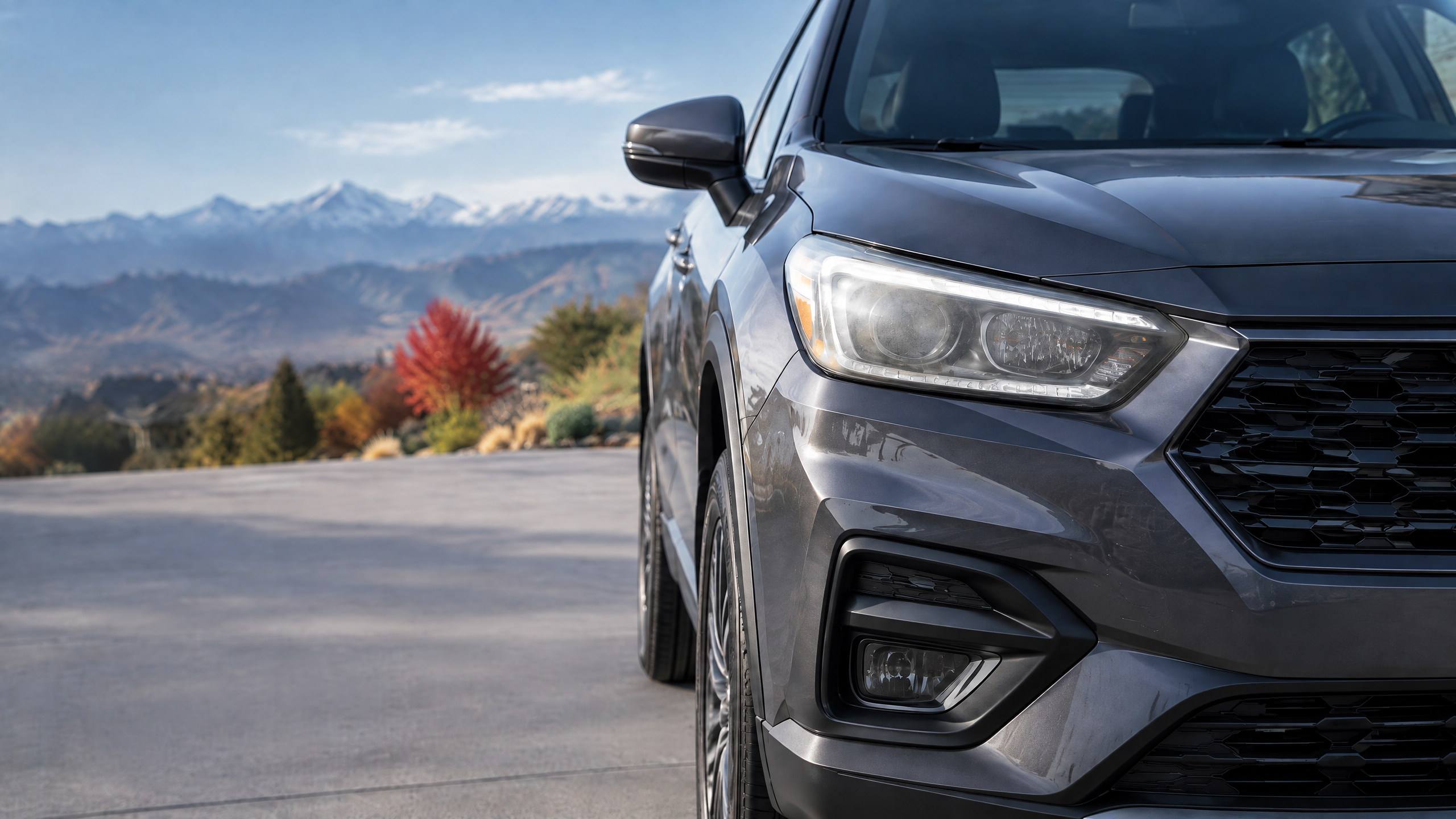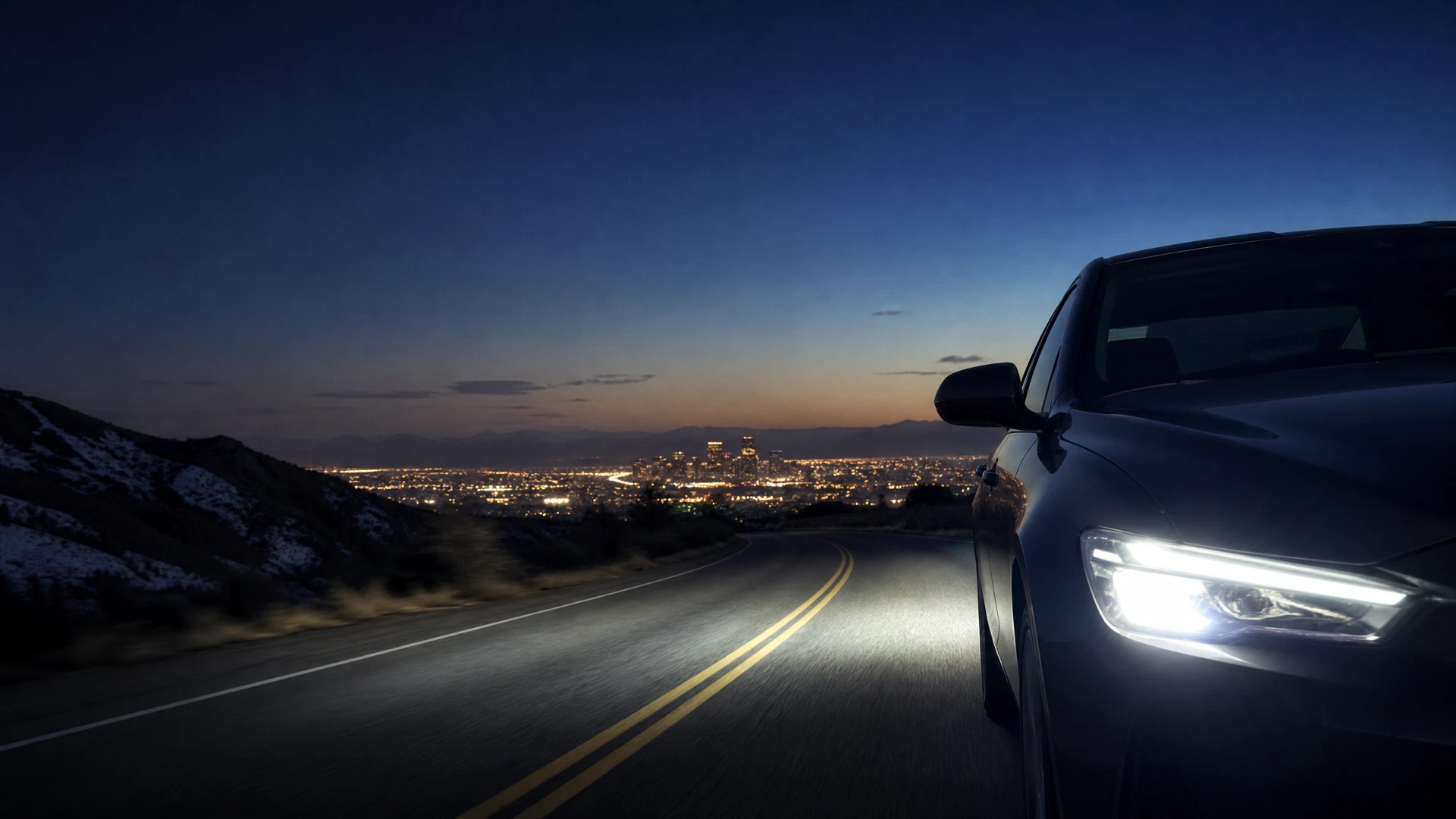
Night driving asks more of every part of your vehicle's lighting system. The National Safety Council notes that even high beams offer limited visibility in darkness, while normal headlights offer less distance to react. Clear lenses cannot solve every night-driving challenge, but cloudy lenses can make a difficult situation worse.
If driving after sunset feels more tiring than it used to, it is worth checking the condition of your headlight lenses before assuming you simply need brighter bulbs.
What Cloudy Lenses Do to Light
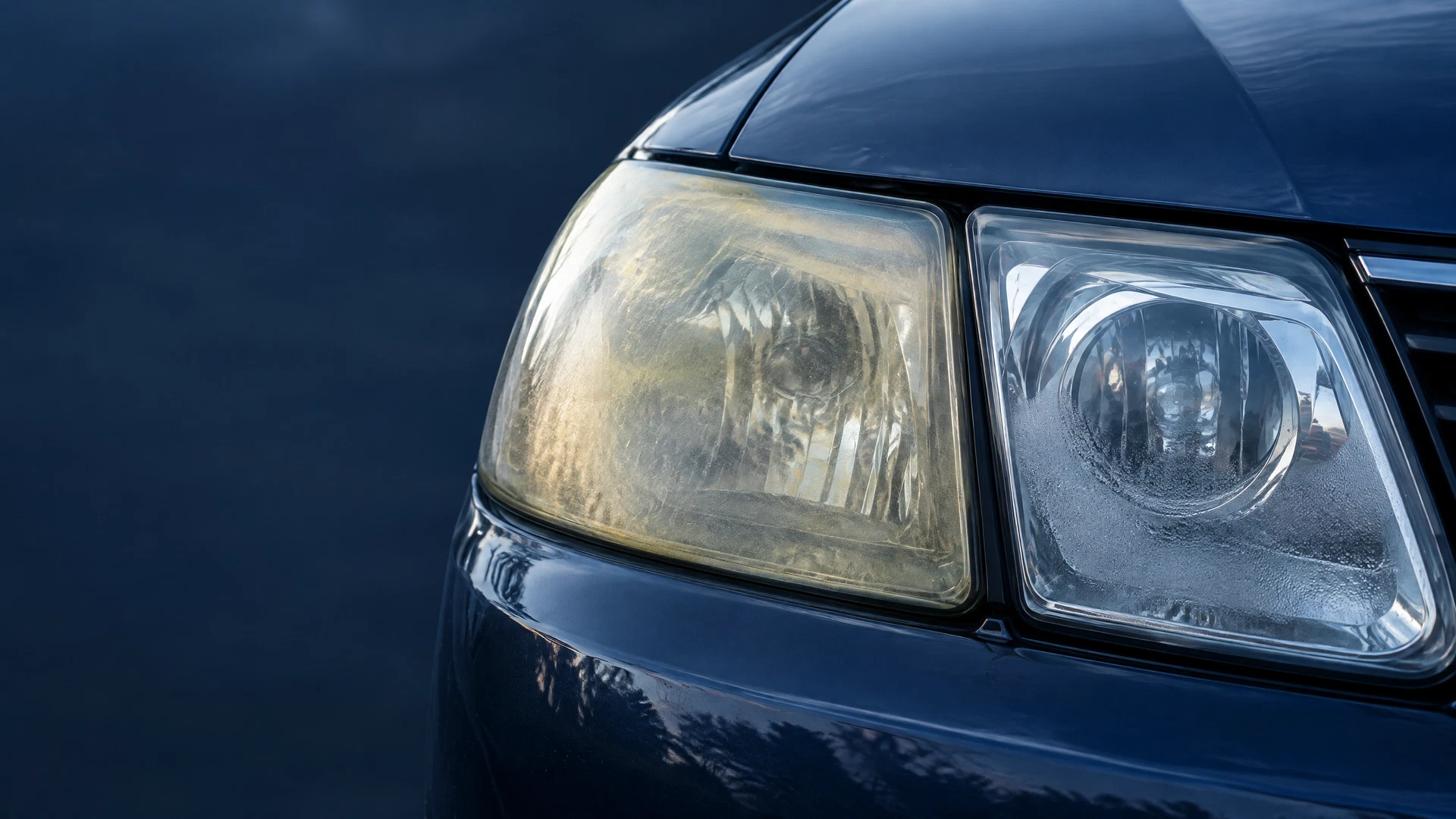
A clear lens helps direct light forward in a focused pattern. Oxidation, yellowing, pits, and scratches scatter that light. Instead of sending as much usable light down the road, the lens creates a diffuse glow near the vehicle. You may notice more glare in front of the car and less definition on lane markings or reflective signs.
That is why a bulb change does not always solve a visibility complaint. A new bulb still has to shine through the same worn lens.
A Simple Daylight Checklist
Park your car in daylight and inspect both headlights before your next evening drive.
- Do the lenses look yellow, milky, or noticeably dull?
- Does one side look hazier than the other?
- Can you feel roughness, pitting, or peeling on the outer surface?
- Is there moisture or fogging inside the housing?
- Do the beam patterns look uneven when aimed at a flat wall?
- Do you find yourself relying on high beams more often than before?
Internal moisture, broken housings, and bad bulbs may require a repair or replacement. Exterior cloudiness and surface wear may be candidates for restoration.
Night Driving Habits Still Matter
Clear headlights are only one part of safe night driving. Keep your windshield clean inside and out, dim the dashboard enough to reduce reflections, slow down for available visibility, and make sure the lights are aimed correctly. If you wear glasses, clean lenses and an anti-reflective coating can also reduce distracting glare.
Colorado conditions add another layer. Winter commutes, early sunsets, mountain weather, and unlit roads make a dependable lighting system especially important.
When a Photo Assessment Helps
If the headlight exterior is visibly yellow or rough, take a close photo in indirect daylight. Headlight Boost can review the condition and tell you whether mobile restoration is a realistic option for your vehicle. You can also see what different surface conditions look like on our gallery page.
Text your photo to (720) 720-4910 for an honest Denver Metro assessment. If your headlights need replacement rather than restoration, we will tell you that too.