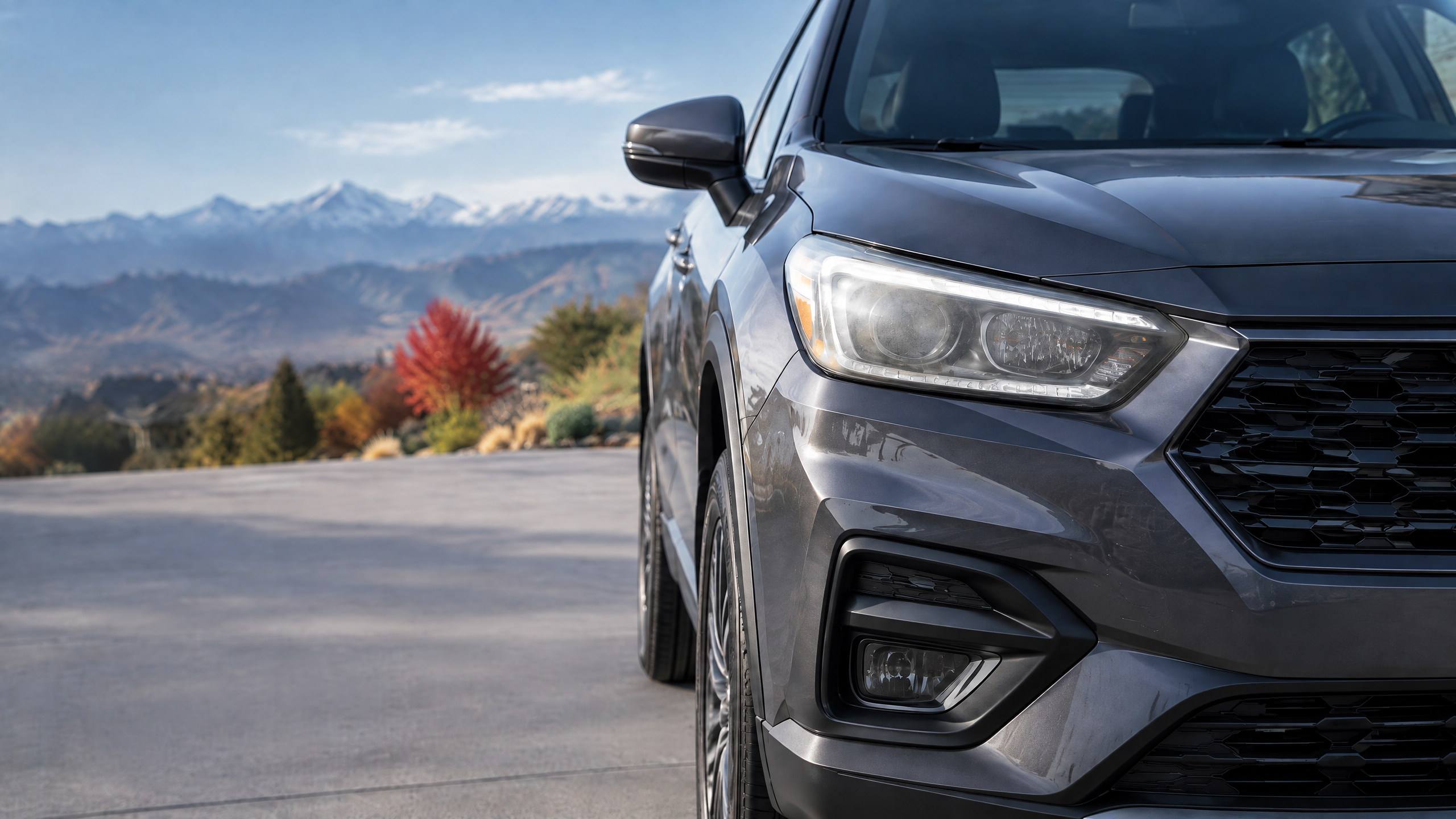
"My headlights look foggy" can describe two very different conditions. One is exterior oxidation on the outside of the lens, where a restoration service may help. The other is moisture behind the lens, where the issue may involve normal condensation, a venting condition, a seal, or damage to the lamp assembly.
Knowing the difference helps you avoid the wrong repair. A polish on the outer surface cannot dry water trapped inside a headlight. In the same way, replacing an assembly may be unnecessary when the only problem is exterior haze on an otherwise sound lens.
Exterior Oxidation: The Part You Can Feel
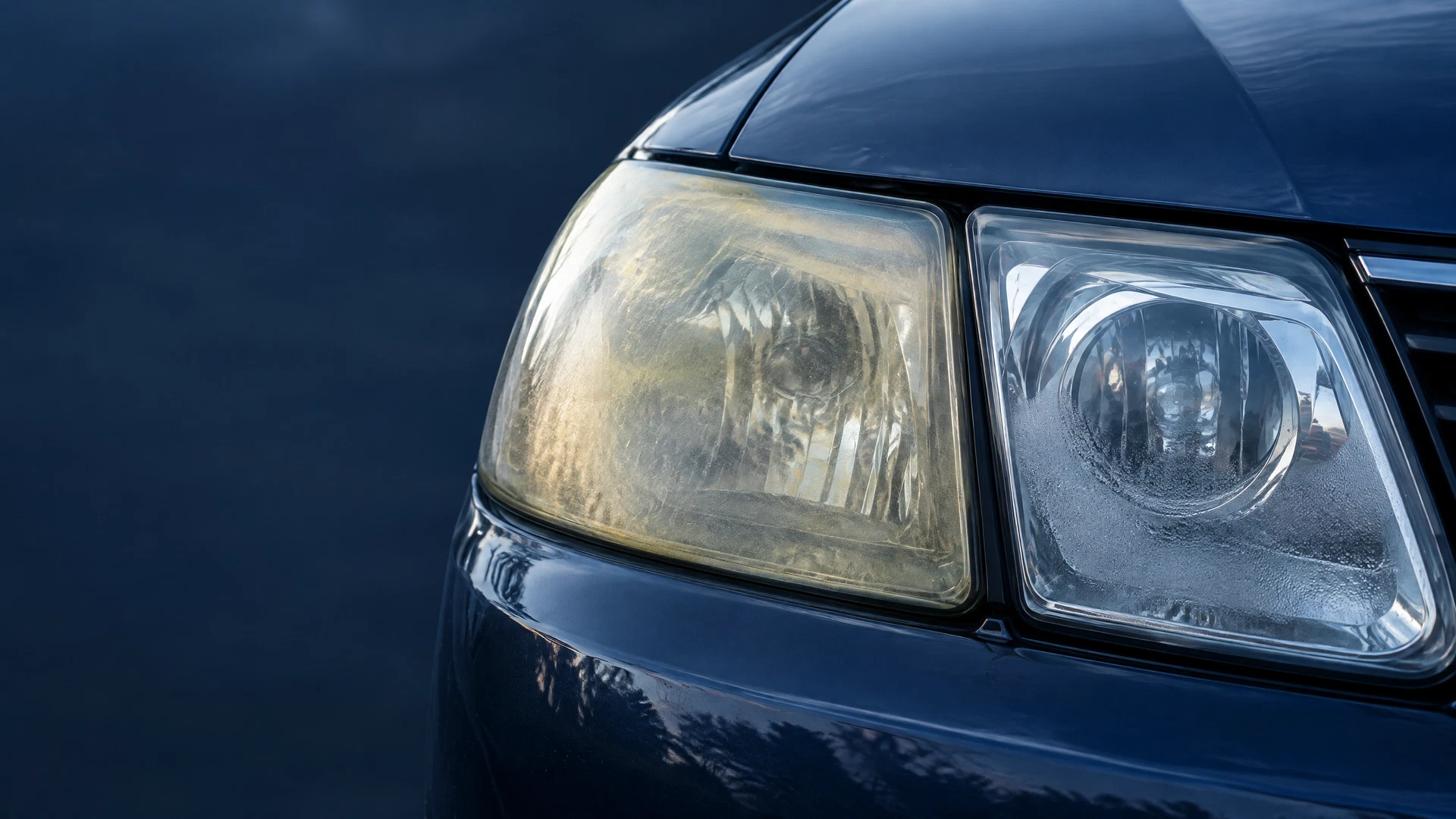
Exterior oxidation happens on the outer polycarbonate lens. It is usually caused by a combination of sun exposure, road film, abrasives, and the eventual wear of the lens's original protective surface. In daylight, it often appears as yellowing, a dull white haze, a rough feel, peeling coating, pitting, or fine scratches.
A simple check is to wash the lens gently, dry it with a clean microfiber towel, then look across the surface at an angle. If the cloudiness sits on the exterior and the surface feels textured or worn, it may be a restoration candidate. Our 60-second headlight check explains the common exterior signs in more detail.
Interior Condensation: The Part Behind the Lens
Fine mist on the inside surface is not automatically proof that a headlight has failed. Vehicle manufacturers publish service guidance explaining that changing temperature and humidity can create temporary condensation inside a lamp. A NHTSA-hosted Hyundai bulletin, for example, describes fine condensation after rain, a car wash, or cold conditions as a normal occurrence in some situations.
Normal condensation should not be confused with exterior oxidation. It sits behind a lens that may feel smooth and clear on the outside. Depending on the vehicle and conditions, the moisture may clear after normal operation in a dry environment. Always follow your vehicle manufacturer's guidance for your specific model.
Signs That Point to a Water Leak or Needed Repair
Some moisture conditions deserve a proper lamp inspection rather than an exterior restoration. Manufacturer service guidance flags conditions such as water collecting at the bottom of the lamp, water streaks, numerous large droplets, or moisture that does not clear after normal lamp operation. Cracks, damaged seals, poor fitment, blocked vents, or collision damage can contribute to this kind of water ingress.
- Water pools or sloshes at the bottom of the housing.
- Large droplets or streaks form behind the lens.
- Moisture persists instead of behaving like temporary fine mist.
- One lamp behaves very differently from the other without an obvious weather explanation.
- The headlight also has a lighting fault, crack, broken housing, or corrosion concern.
Those signs can point to a lamp-repair or replacement issue. They are not corrected by sanding or polishing the exterior lens. If visibility is compromised or you notice an electrical concern, have the appropriate repair professional inspect the vehicle.
Which Service Fits the Problem?
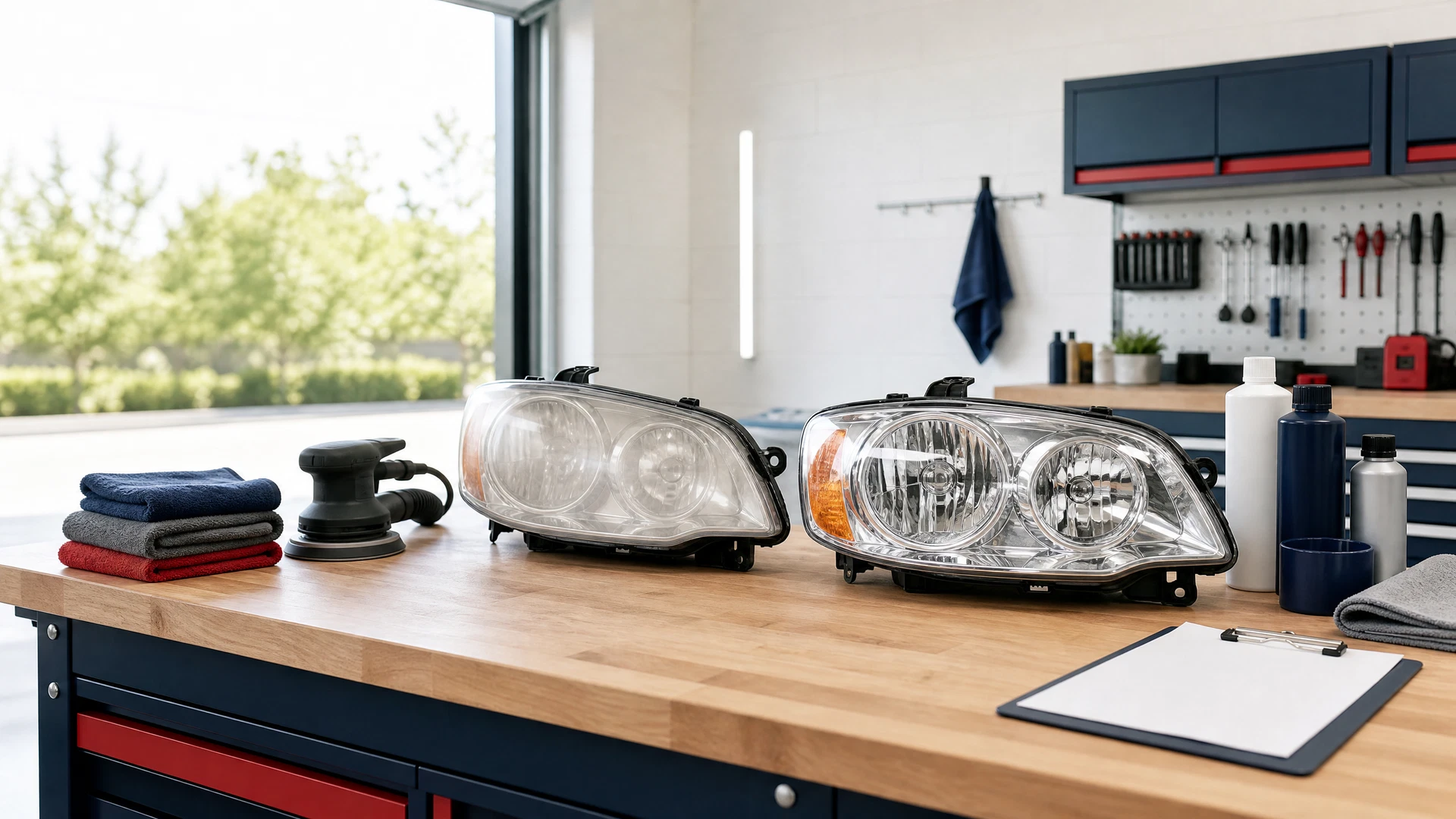
Exterior restoration is designed for suitable wear on the outside of a structurally intact lens. It can address reachable oxidation, yellowing, light scratches, and surface dullness. It does not service internal moisture, replace seals, repair electronics, or correct a cracked housing.
If you drive a newer vehicle with LED lighting, the same distinction applies. Read our guide on restoring cloudy LED headlight lenses to understand the limits between a surface service and a lamp-system repair.
Take the Right Photos First
For an initial assessment, take one photo straight at the lens in daylight and another from the side. If you can see yellowing or texture on the surface, include a close-up. If the moisture is behind a clear-looking lens, show that too. Text the photos to (720) 720-4910, and Headlight Boost will let you know whether it appears to be exterior wear that may fit mobile restoration in the Denver Metro area.
Technical note: Temporary lamp condensation and water ingress are vehicle-specific conditions. See the NHTSA-hosted lamp-condensation service bulletin and consult your vehicle manufacturer's service guidance.