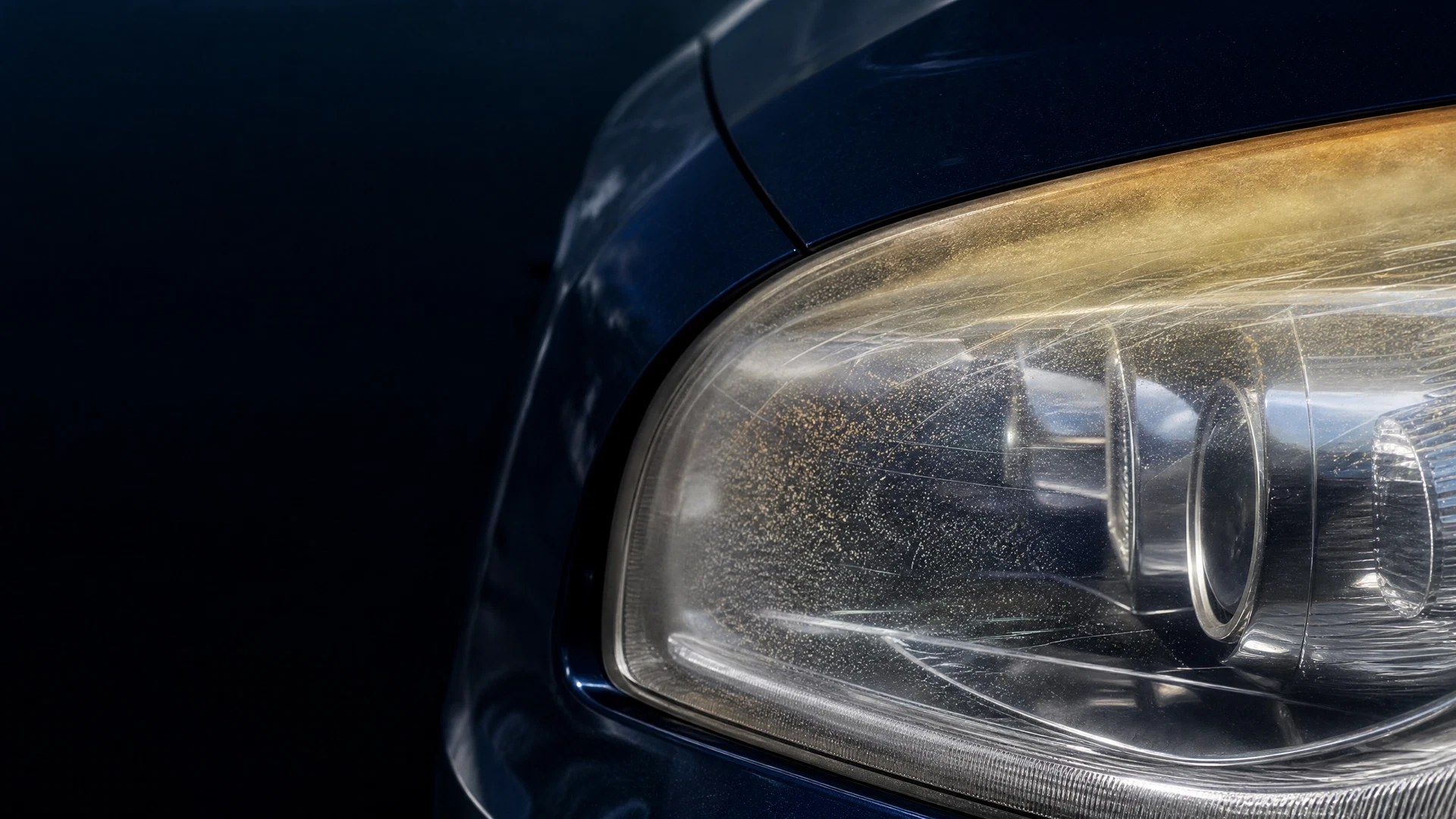
Yellowing gets most of the attention, but many Colorado headlights have another issue: a rough, sandblasted surface. Small road impacts can leave tiny pits and scratches across the lens. In daylight, they may look like dull specks. At night, they scatter light and make the beam look less focused.
The good news is that surface damage does not automatically mean you need new headlights. The right answer depends on where the damage is and how deep it goes.
How to Tell Pitting From Ordinary Cloudiness
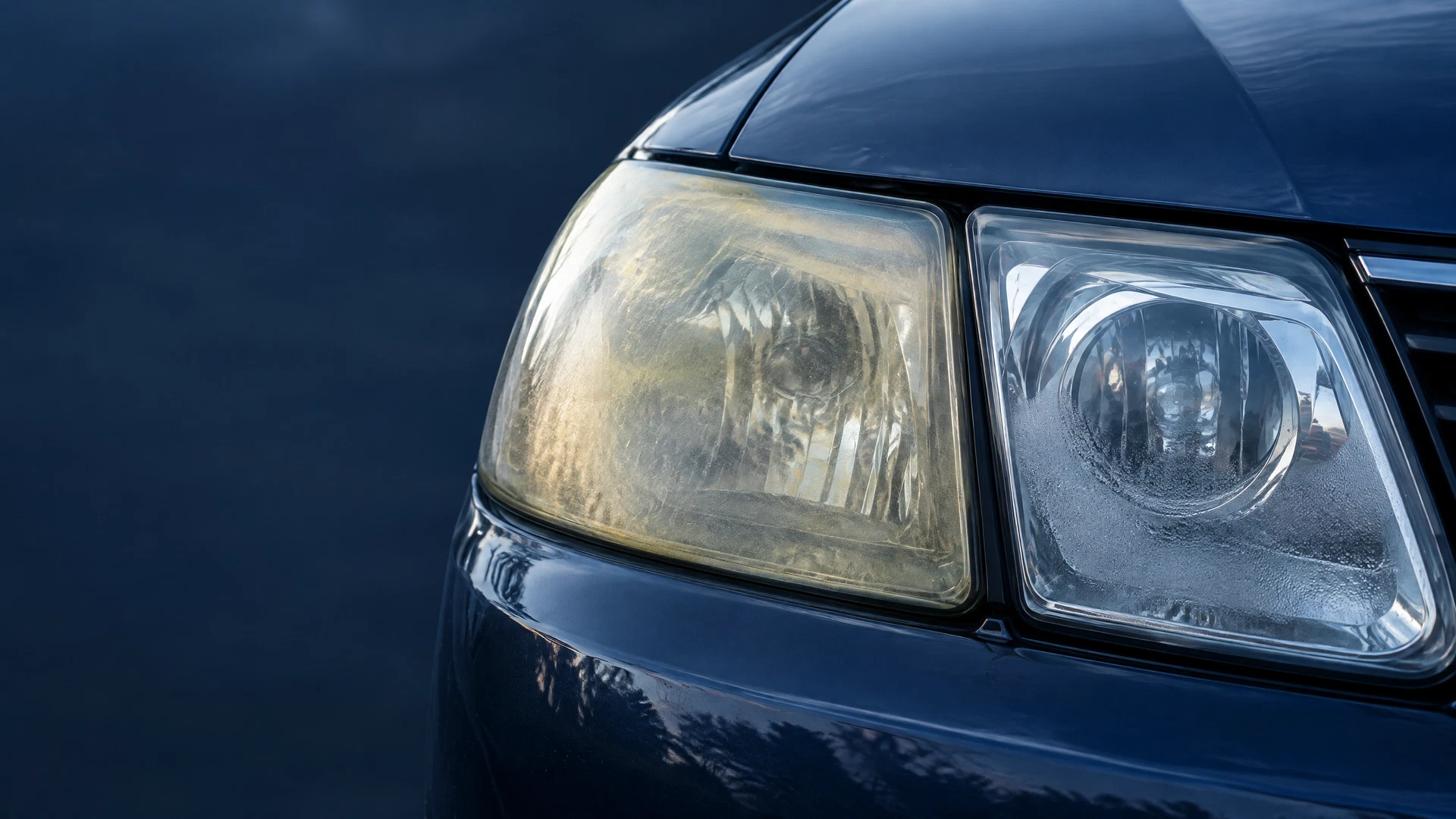
Oxidation usually looks yellow, milky, or hazy across the outer layer of the lens. Pitting looks more like tiny craters or peppered dots. Shallow scratches often show up as fine lines when sunlight hits the lens at an angle. After washing the lens, carefully run a clean fingertip across it. A gritty or rough feel suggests the issue is physical wear, not just surface film.
Both problems can happen at the same time. A headlight may have failed UV coating from sun exposure plus years of small impacts from road grit.
What Restoration Can Usually Improve
Professional restoration can often improve light surface pitting, shallow scratches, oxidation, and failed outer coating. The process levels the damaged outer layer through controlled sanding, then refines and polishes the lens before applying protection. The goal is to create a smooth surface that lets light pass through more cleanly.
Results depend on the condition of the lens. A photo is a useful starting point, but an in-person look can confirm whether the wear is limited to the exterior surface.
When Replacement Is the Better Answer
Some damage cannot be safely restored. Replacement is generally the better path when you have:
- A crack that runs through the lens.
- Water, fogging, or debris trapped inside the housing.
- Broken mounting tabs or a damaged headlight housing.
- Damage on the inside surface that cannot be reached from the exterior.
- Very deep impact damage that would require removing too much material.
In those cases, restoration may improve appearance but cannot correct the structural issue. A trustworthy assessment should tell you that before work begins.
Why Colorado Drivers See More Surface Wear
Denver Metro vehicles are exposed to sun, construction dust, mountain-road debris, and winter traction materials. Over time, that mix can create a lens surface that looks dull even after a normal wash. Parking outside can add UV oxidation to the same lens, making the problem appear worse.
If the lens is still structurally sound, restoration can be a practical alternative to replacing an entire assembly. Browse real examples on our before-and-after gallery, or text a clear close-up photo to (720) 720-4910 for an honest assessment from Headlight Boost.