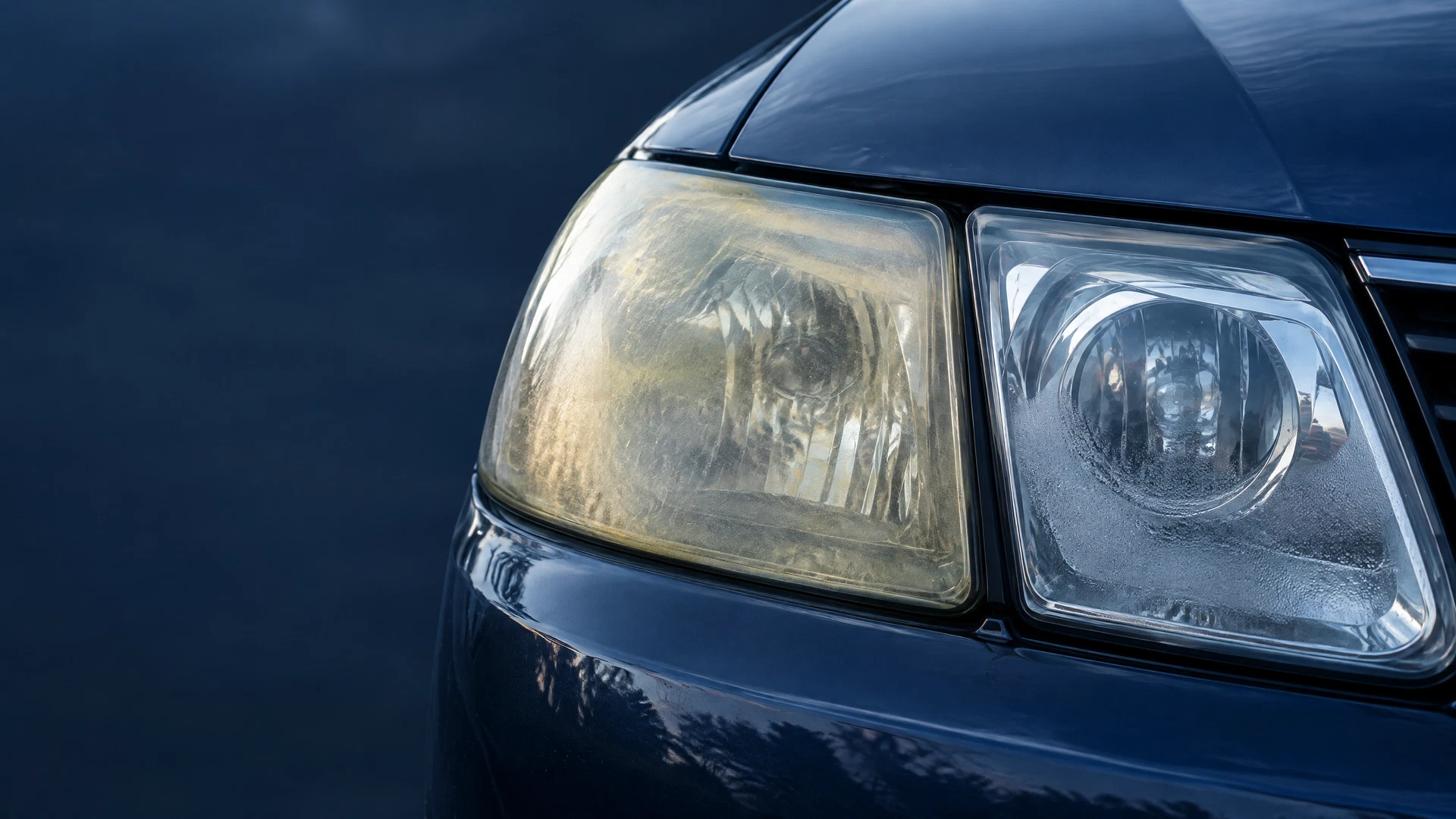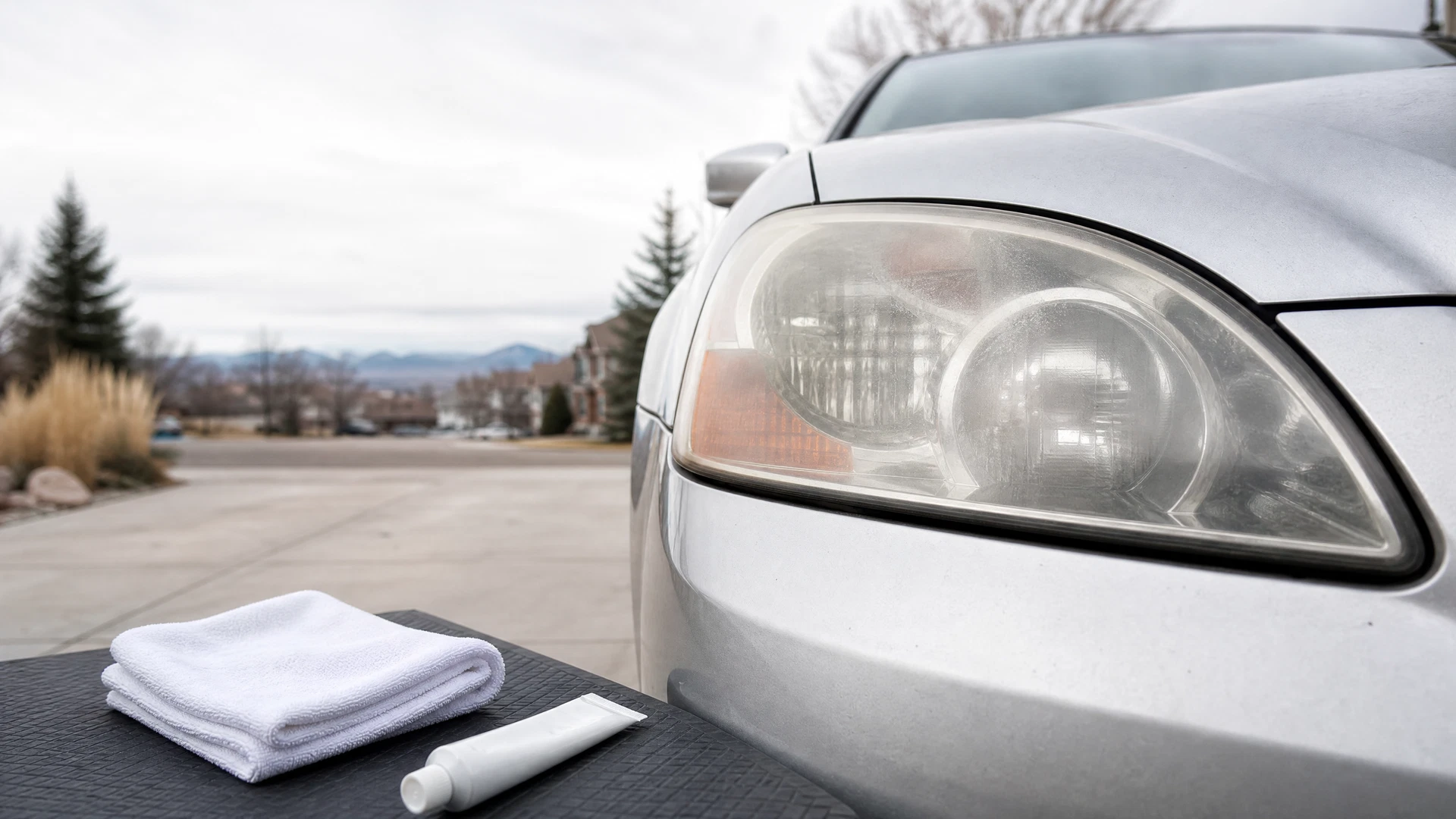
Videos of toothpaste cleaning a cloudy headlight are everywhere, and the result can look convincing. Toothpaste contains mild abrasives, so it can polish away some surface film and make a lightly hazy lens look brighter for a short time. For a Denver driver facing an older, yellowed headlight, that quick improvement can be tempting.
The important question is not whether toothpaste can make a difference for an afternoon. It is whether it solves the reason the lens became cloudy in the first place. Usually, it does not.
Why Toothpaste Can Make a Lens Look Better
Most non-gel toothpastes contain fine abrasive ingredients intended to remove stains from teeth. On a plastic headlight lens, those same mild abrasives can remove road film and lightly polish the oxidized outer surface. AAA notes that toothpaste can scuff away a yellow film on older headlights, but it also recommends purpose-built products or professional help when the lens needs more than a simple cleaning.
That means the trick can be reasonable for a quick visual check on a mildly dull lens. It is not a dependable answer for severe yellowing, rough texture, peeling coating, pitting, or scratches you can feel with a fingernail.
What Toothpaste Does Not Do
Toothpaste is not designed to level a deeply oxidized polycarbonate lens, correct road pitting, or apply a durable UV barrier. Those gaps matter in the Denver Metro area, where intense sun, temperature swings, and road debris are hard on exterior plastics.
- It does not remove deeper oxidation evenly.
- It does not repair chips, cracks, or internal condensation.
- It does not restore a sharp light pattern when the lens is heavily scratched.
- It does not replace the UV protection that helps a restored lens stay clear.
Repeated scrubbing can also leave inconsistent results if grit is trapped between the cloth and lens. Always rinse the surface first and avoid harsh solvents, bug spray, acetone, or household cleaners that can damage surrounding paint and plastic.
When a DIY Attempt May Be Reasonable
A careful DIY clean can make sense when the lenses are only lightly dull and you want to see whether the issue is mostly road film. Use a clean microfiber towel, keep the surface wet, work gently, and wash any residue off the paint and trim. If the lens still looks yellow, feels rough, or becomes cloudy again quickly, the problem is beyond a basic polish.
Drivers who want to do their own restoration should use products made for headlight lenses rather than improvising with household products. Follow the product instructions carefully and test a small area first.
When Professional Restoration Is the Better Choice
Professional restoration is a better fit when the outer coating has failed, the lens is strongly yellowed, or road wear has created visible pitting and scratches. The process uses controlled sanding, machine polishing, and a UV-protective finish rather than a one-step wipe or polish.
Not sure which category your headlights fall into? Send Headlight Boost a clear daytime photo by text at (720) 720-4910. We will give you an honest assessment for your Denver Metro vehicle and let you know whether a professional restoration is likely to help.