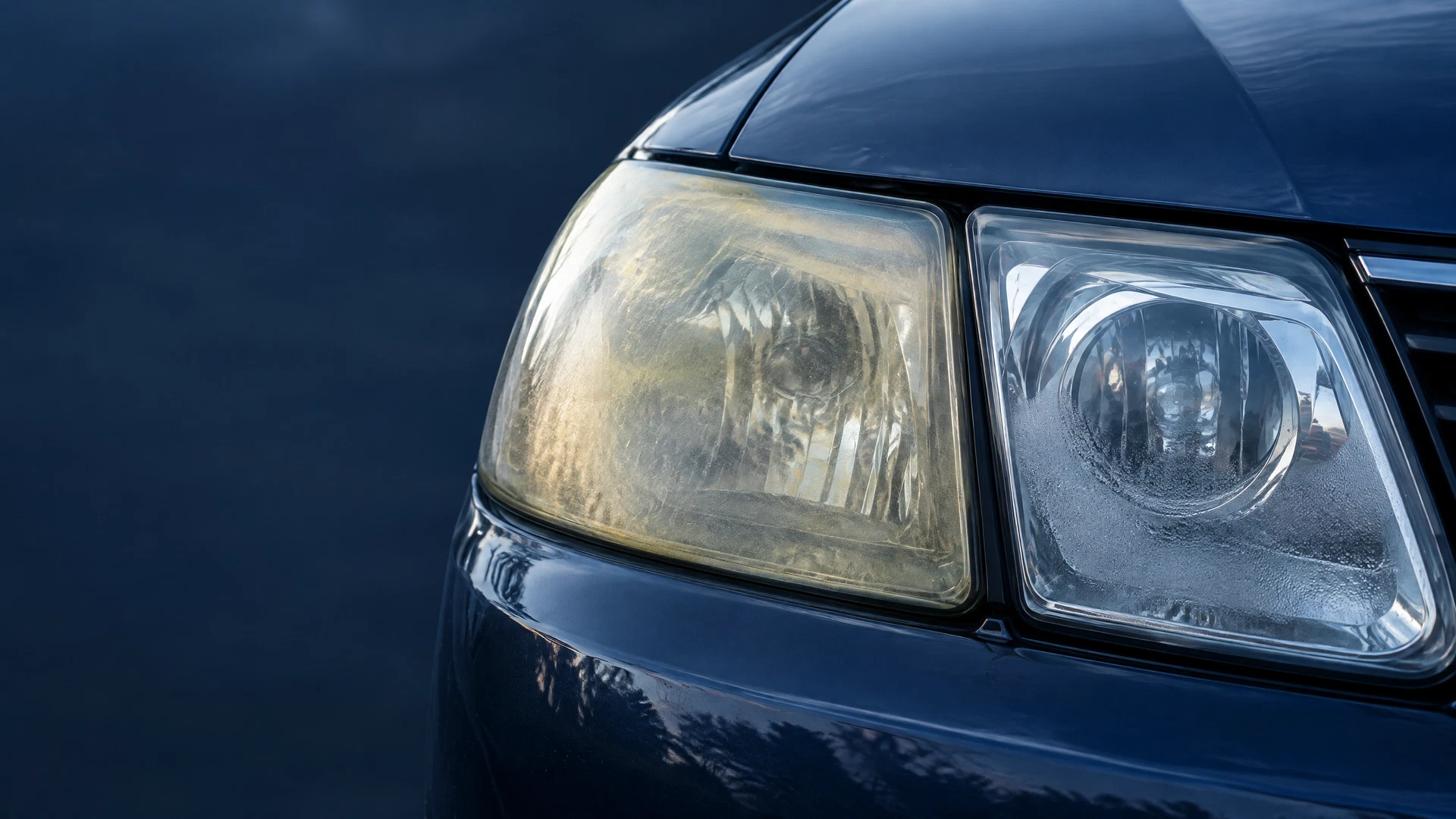
Colorado winter driving leaves more than snow on your vehicle. Sand, grit, slush, deicing residue, and road film can collect on the front end after a commute. That buildup is easy to ignore until a lens starts looking dull, scratched, or hazy.
Winter residue does not automatically ruin headlights, but the way it is cleaned can make a difference. A little routine care helps reduce unnecessary wear on the lens surface.
Why Winter Grime Is Hard on Headlight Lenses
Headlight lenses are plastic, not windshield glass. Fine grit can act like sandpaper when it is rubbed across a dry lens. That means an aggressive wipe with a dirty towel, a snow brush, or an ice scraper can create small scratches that scatter light.
Road film can also hide early signs of oxidation. Once the vehicle is clean, you may notice a yellow cast, a rough texture, or small impact marks that were not visible under the grime.
Use a Rinse-First Cleaning Routine
After a storm or a long drive on treated roads, start by rinsing the headlights with water. The goal is to float away loose sand before touching the surface. Then use an automotive wash solution and a clean microfiber towel with light pressure.
- Rinse away loose grit before wiping.
- Use a clean microfiber towel rather than paper towels or abrasive pads.
- Avoid scraping ice directly off the headlight lens.
- Choose a touchless wash when the vehicle is heavily coated in road residue.
- Inspect the lenses after washing in daylight.
Check for More Than Dirt
A clean lens makes it easier to see what is actually going on. Look for a cloudy outer layer, small pits, peeling coating, or internal moisture. Dirt can be washed off. Failed coating and exterior oxidation need a different solution.
If the lens still looks milky after a gentle wash, do not keep scrubbing harder. Repeated aggressive cleaning can add more surface wear without removing the underlying damage.
Protecting a Freshly Restored Lens
A quality protective finish helps a restored lens handle normal weather exposure, but it still benefits from good washing habits. Rinse off winter residue promptly when practical, keep the surface clean, and avoid brushes that may trap grit.
Vehicles that spend winter on I-25, I-70, C-470, or long suburban commutes can benefit from a quick monthly lens check. Catching a dull surface early gives you more options than waiting until the haze becomes obvious.
When to Request an Assessment
Send a photo if you see permanent haze, rough pitting, yellowing, or a lens that looks dimmer than the other side. Headlight Boost provides mobile restoration across the Denver Metro area, including Lakewood, Arvada, Aurora, and surrounding communities.
Text a clear daytime photo to (720) 720-4910 for an honest assessment and quote before winter wear turns into a larger headlight problem.