Most drivers don't notice how bad their headlights have gotten until someone else points it out — or worse, until they're squinting through a foggy lens on a dark Colorado highway. Headlight degradation happens gradually, which is exactly why it's so easy to miss.
The good news: you can assess your headlights in about 60 seconds. Here's what to look for.
1. Yellowing or Amber Discoloration
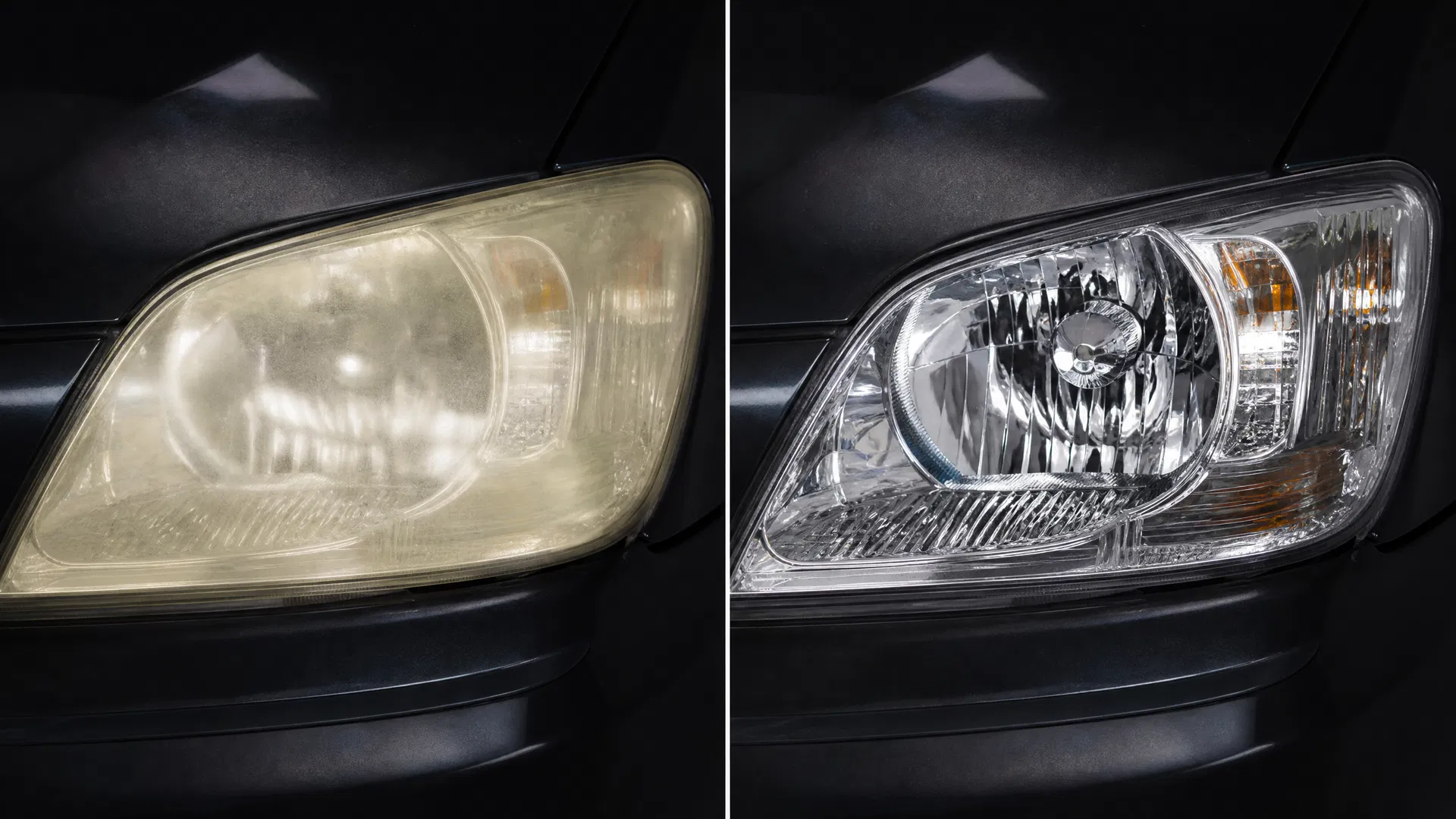
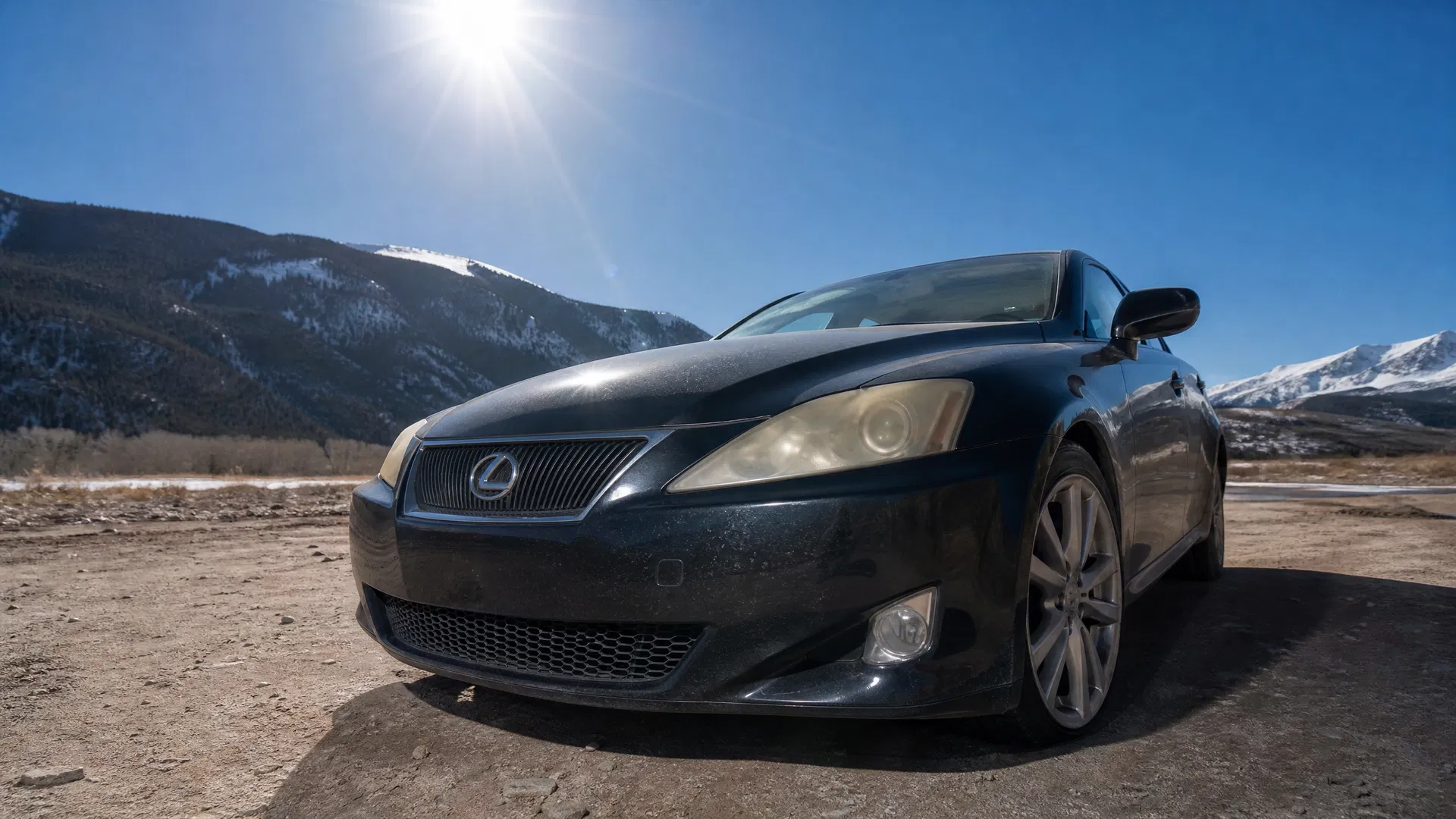
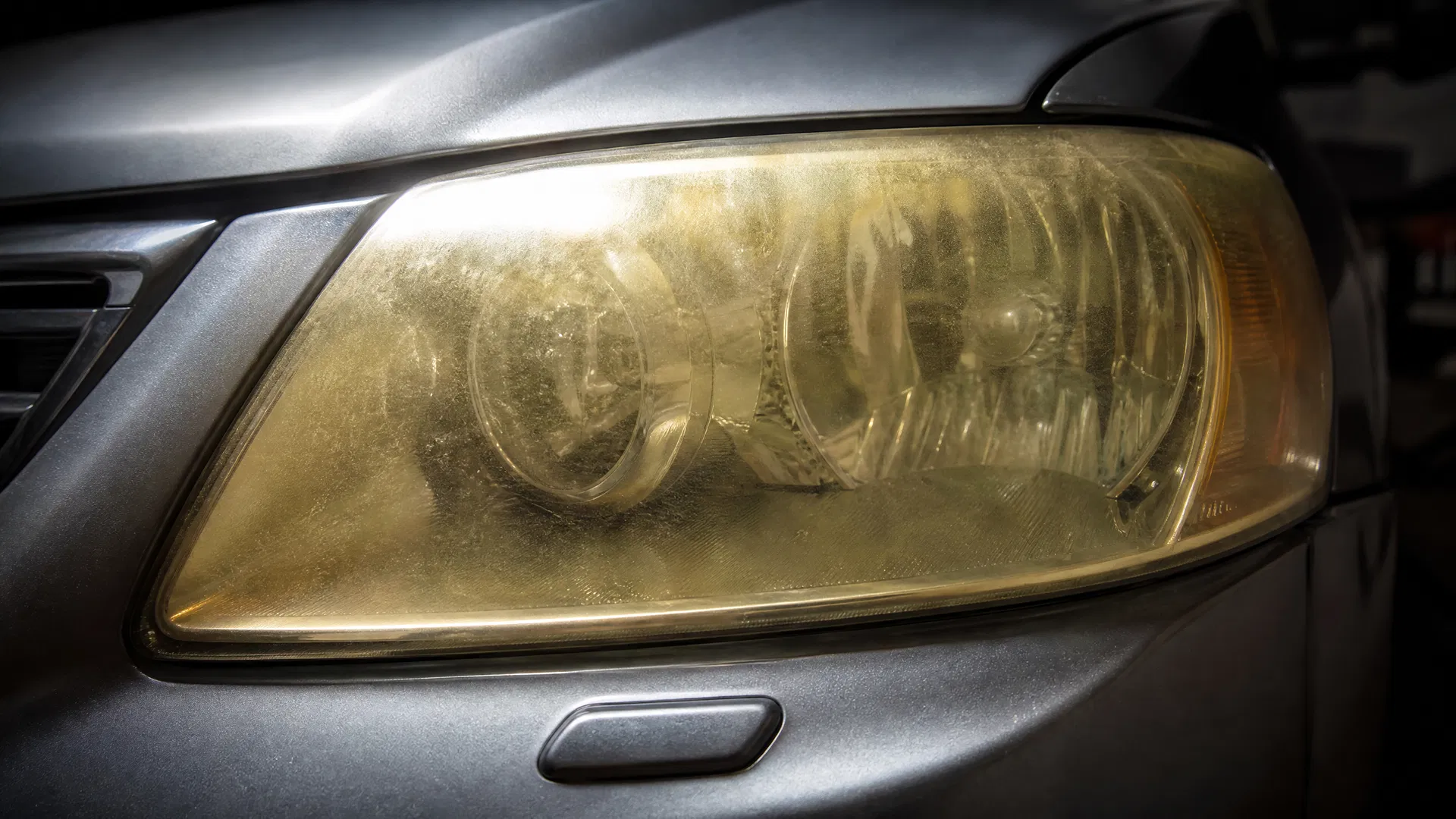
New headlight lenses are crystal clear. Over time, UV radiation breaks down the polycarbonate plastic, causing it to oxidize and turn yellow or amber. If your headlights look like they're tinted with a yellowish film, that's oxidation — and it only gets worse without treatment.
This is the most common sign, and it's almost always fixable with professional restoration. You don't need new headlights.
2. Cloudy or Hazy Appearance
Oxidation doesn't always show up as yellow. Sometimes it looks like a white haze or milky cloudiness across the lens. This is the UV-damaged outer layer of the polycarbonate breaking down. The cloudier the lens, the less light gets through — which directly impacts your visibility at night.
Studies have shown that severely oxidized headlights can reduce light output by up to 80%. That's the difference between seeing a deer in the road and not seeing it until it's too late.
3. Reduced Brightness at Night
If you've noticed your headlights don't seem as bright as they used to be, or you find yourself leaning forward to see better at night, your lenses are almost certainly the culprit. The bulbs themselves rarely dim gradually — but oxidized lenses absolutely do.
A quick test: if your headlights look noticeably dimmer than a newer car parked next to you, your lenses need attention.
4. Visible Scratches or Pitting
Road debris, sand, and gravel leave micro-scratches on headlight lenses over time. In Colorado, this is especially common due to the sand and cinders used on roads during winter. These scratches scatter light, reducing beam focus and making your headlights less effective even if the lens isn't heavily oxidized yet.
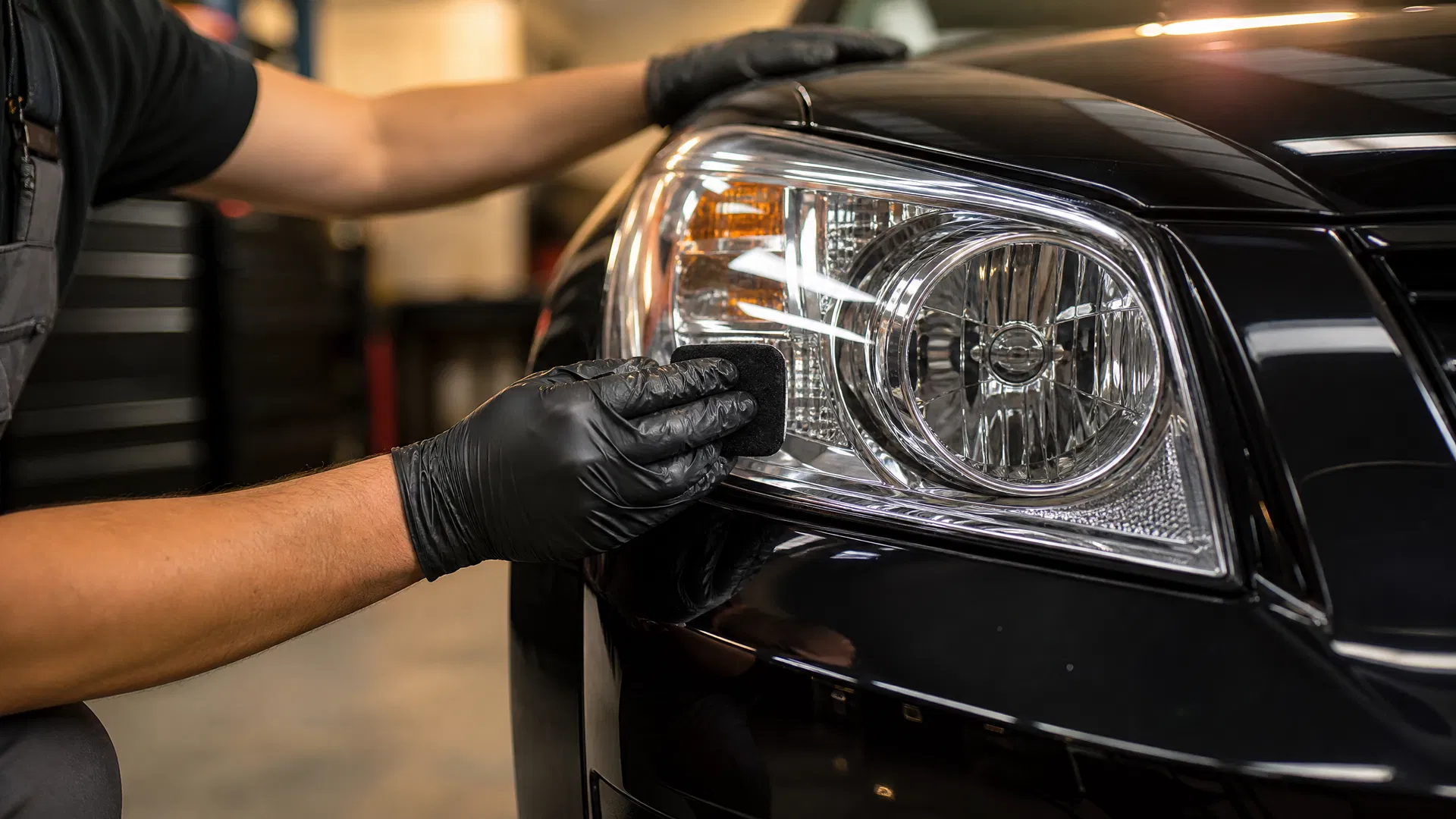
Light surface scratches are fully removable with professional wet sanding and polishing.
5. Peeling or Flaking Coating
If you see what looks like a clear film peeling off the surface of your headlights, that's the factory UV-protective coating failing. Once it starts peeling, the bare polycarbonate underneath oxidizes rapidly. This is an urgent sign — the longer you wait, the deeper the damage goes.
The 60-Second Check
Walk to the front of your car in daylight and look at your headlights straight on. Ask yourself:
- Are they clear, or do they look yellow/amber?
- Can you see through them cleanly, or is there a hazy film?
- Do they look noticeably duller than the rest of your car's finish?
If you answered yes to any of these, your headlights are candidates for restoration. And in Colorado, where UV exposure is significantly higher than most states, that degradation will continue to accelerate if left untreated.
Why Not Just Replace Them?
Headlight assemblies for most vehicles cost $150–$400 each — and that's before labor. Professional restoration typically costs a fraction of that and delivers results that look just as good, with a protective UV coating applied at the end to keep them clear for years.
If your lenses are structurally intact (no cracks, no broken housing), restoration is almost always the smarter choice.
Not sure if your headlights qualify? Text us a photo at (720) 720-4910 and we'll give you an honest assessment — no obligation.