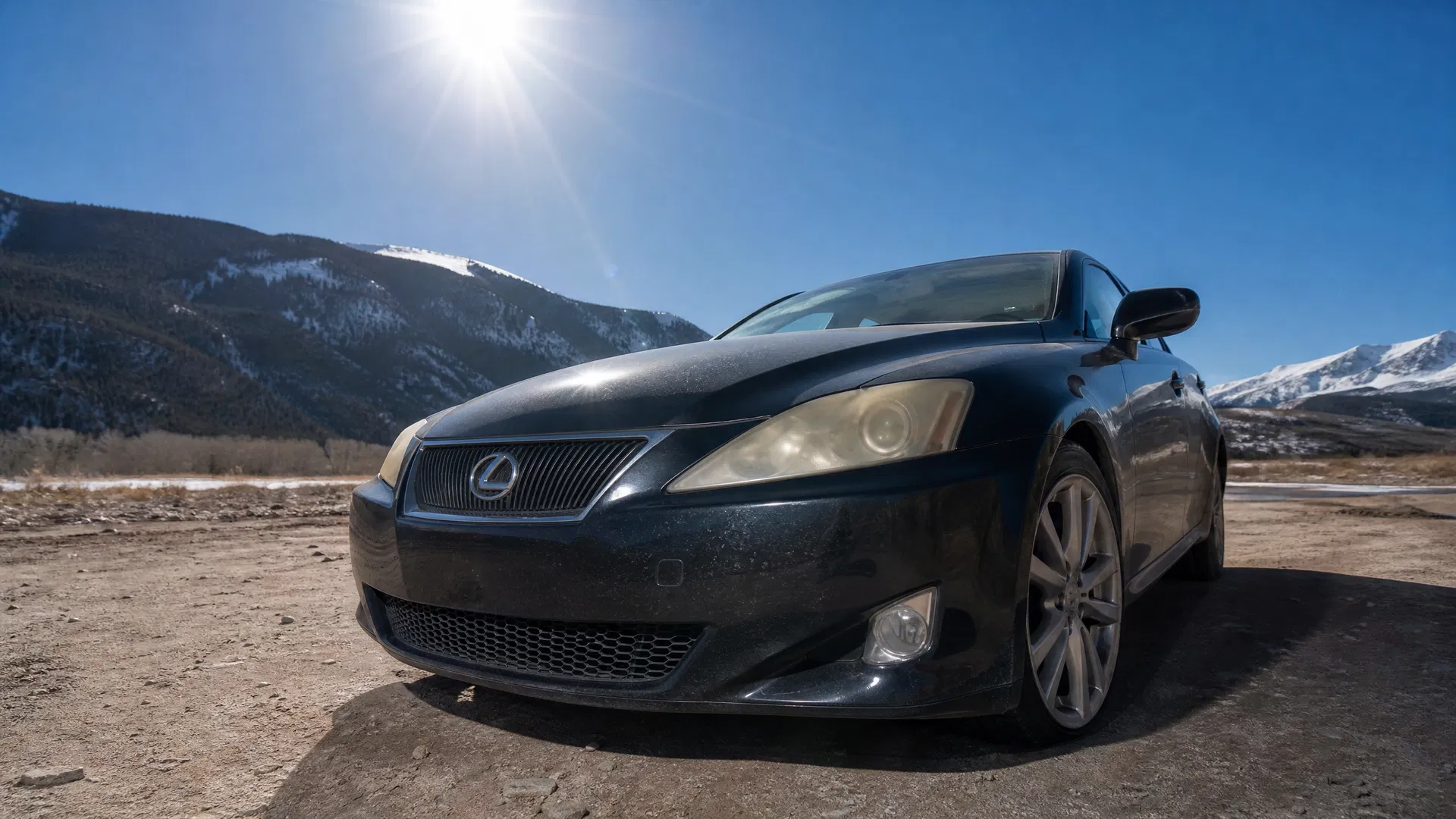
If you've moved to Colorado from another state, you may have noticed your car's paint, rubber seals, and plastic components seem to age faster here. It's not your imagination. Colorado's high altitude and intense sunshine create one of the harshest UV environments in the continental United States — and your headlights take the full brunt of it.
The Altitude Factor
Denver sits at 5,280 feet above sea level. At that elevation, the atmosphere is thinner — meaning less air mass to absorb and scatter incoming UV radiation before it reaches the ground. The general rule of thumb is that UV intensity increases by roughly 4% for every 1,000 feet of elevation gain.
Compared to a city at sea level, Denver residents are exposed to approximately 20–25% more UV radiation on an average day. That's a significant difference — and it compounds over years of sun exposure on your vehicle.
300+ Days of Sunshine
Colorado averages over 300 sunny days per year — more than Miami or Los Angeles. That's not just good for skiing and hiking; it's also a relentless UV assault on every piece of polycarbonate plastic on your vehicle.
Headlight lenses are made from polycarbonate, a durable plastic that's inherently UV-sensitive. Manufacturers apply a thin UV-protective coating to the surface during production, but that coating degrades over time. In Colorado, it degrades faster than in most other states.
How UV Damage Happens
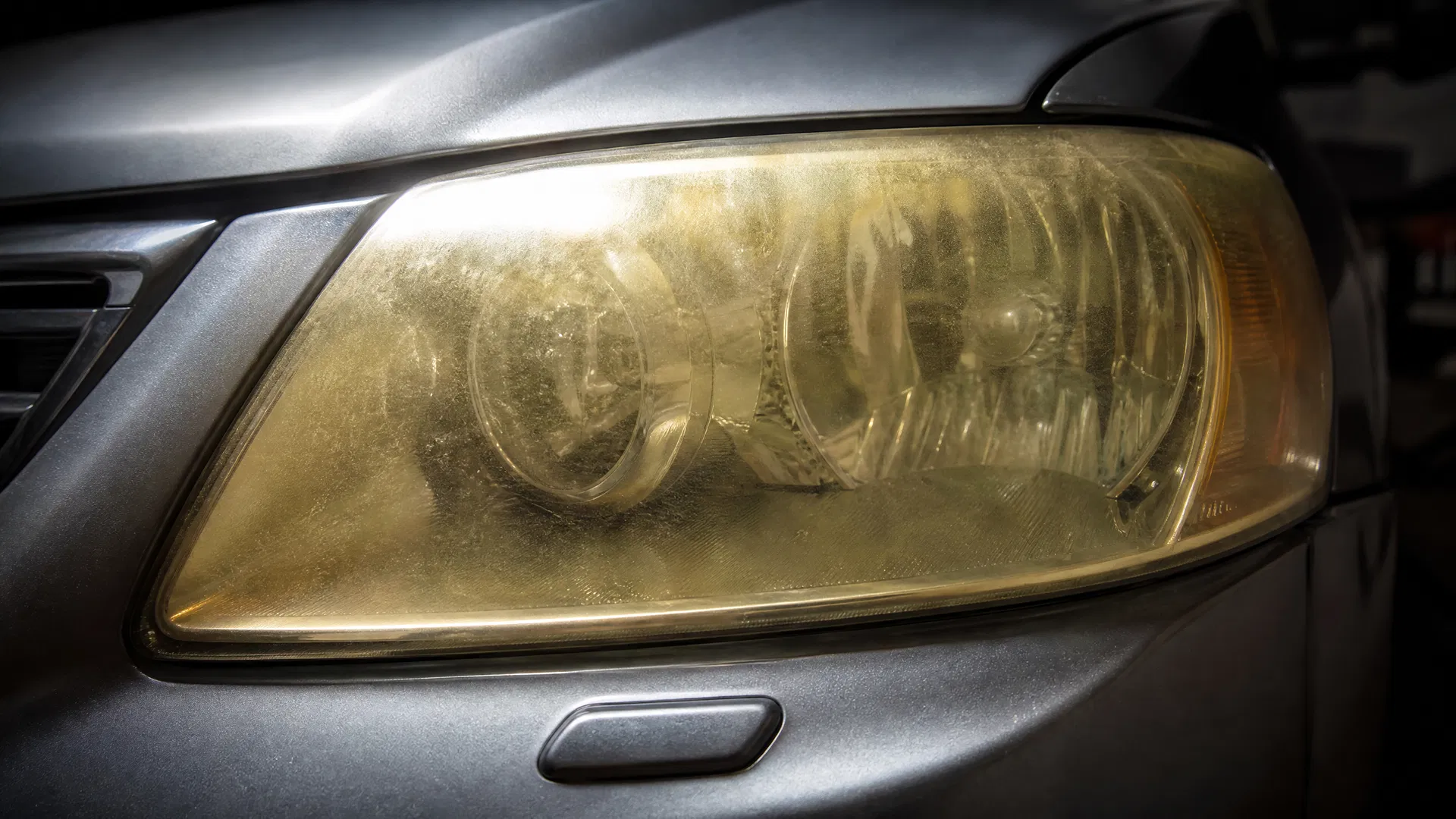
When UV radiation hits an unprotected polycarbonate lens, it triggers a chemical process called photo-oxidation. The UV energy breaks the molecular bonds in the plastic, causing the surface to:
- Turn yellow or amber (the most visible symptom)
- Develop a cloudy, hazy film
- Become brittle and prone to micro-cracking
- Lose its optical clarity, reducing light transmission
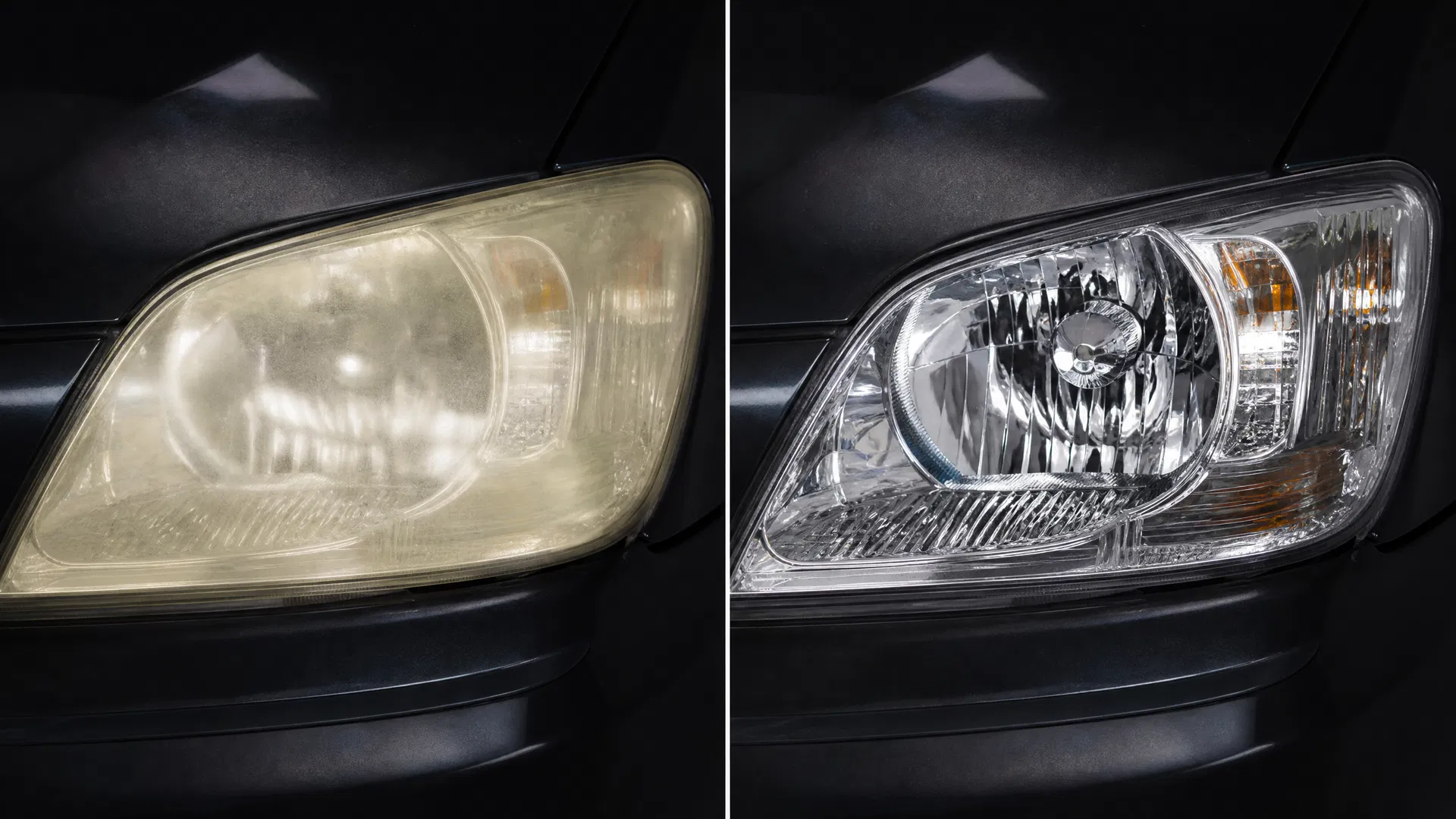
This process is gradual — you might not notice it happening year to year — but the cumulative effect over 3–5 years in Colorado is dramatic. A headlight that might stay clear for 7–8 years in Seattle can be noticeably oxidized in 3–4 years in Denver.
Winter Doesn't Give You a Break
You might think Colorado's snowy winters would reduce UV exposure. They don't — they actually make it worse. Fresh snow reflects up to 80% of incoming UV radiation, effectively doubling the UV dose hitting the front of your vehicle on a sunny winter day. Add the road salt and sand that gets blasted against your headlights all winter, and you have a combination that accelerates both UV oxidation and surface scratching simultaneously.
What You Can Do About It
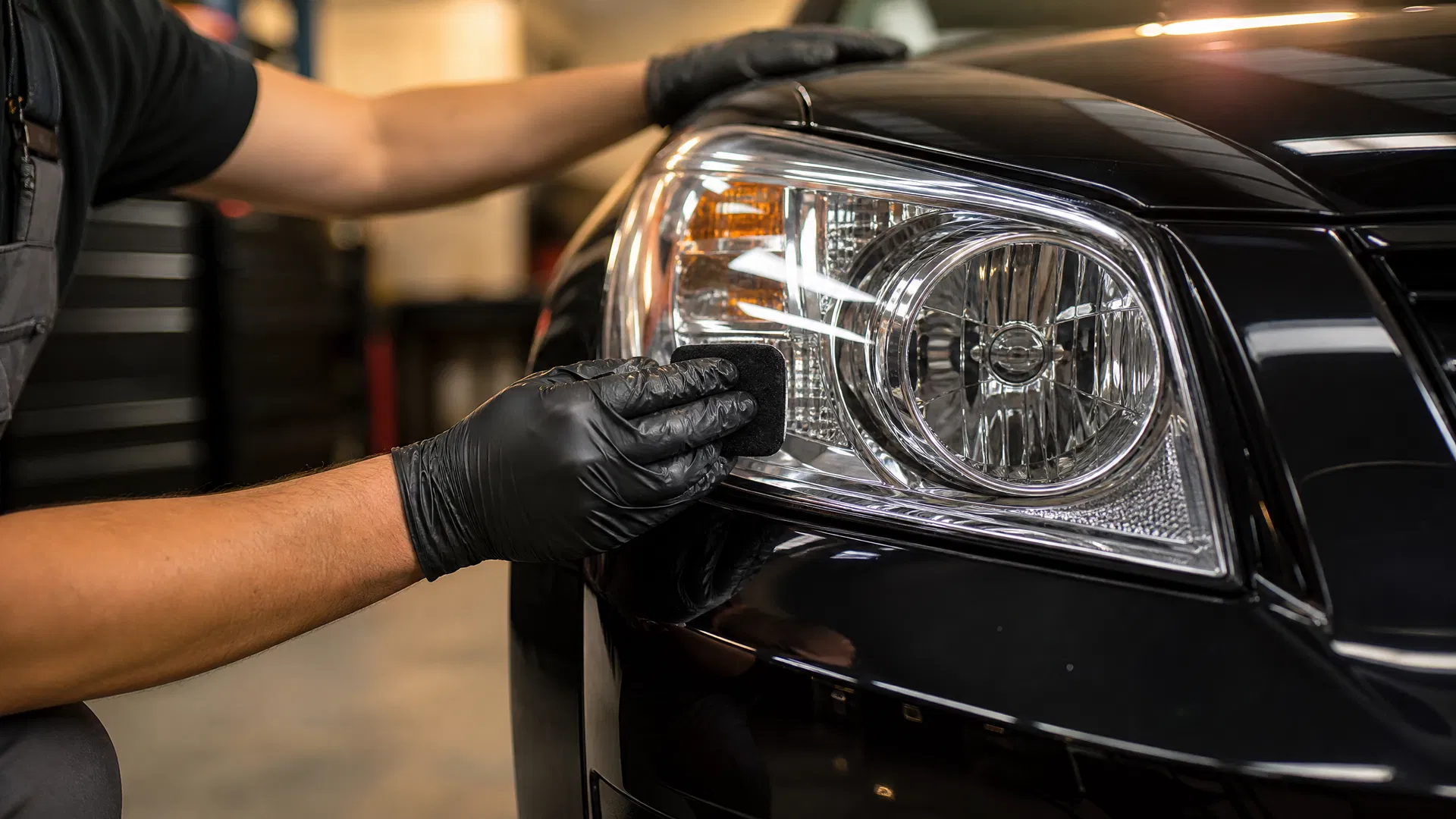
The most effective protection is a quality UV ceramic coating applied over a freshly restored lens. This is exactly what we apply at the end of every restoration job. The coating acts as a sacrificial UV barrier — it absorbs the radiation instead of the polycarbonate underneath, keeping the lens clear for 2–3 years.
If you're buying a new vehicle, consider applying a protective coating proactively before the factory coating degrades. It's much easier (and cheaper) to maintain clarity than to restore it after significant oxidation has set in.
The Denver Metro Reality
We see this every day across the Denver Metro area. Vehicles that are 4–6 years old often have headlights that look 10+ years old. It's not a quality issue with the vehicles — it's a Colorado UV issue. And it's completely fixable.
If your headlights are showing signs of UV damage, text us a photo at (720) 720-4910. We serve the entire Denver Metro area and can typically get to you within a day or two.